


There are some stories that stop you, and this is one of them.
Tafiq Akhir, known widely as Mr Menopause, remembers being a teenager and watching his mother stand at an open window during a Cleveland snowstorm, drenched in sweat, silently suffering through what he would only understand years later was menopause. No one in the family knew what was happening to her body, her mind, her sense of herself. No one had told her. No one had told any of them.
Decades later, when Tafiq finally understood what his mother had been going through, it broke his heart. He thought about how he would have checked on her more, made dinner for her more, tried to make her days a little easier. That realisation stayed with him. And years later, working with women in fitness and nutrition, he began to see the same confusion, the same silence, the same suffering playing out again and again. That is when the direction of his work became clear.
For more than 20 years, Tafiq Akhir has been one of the most dedicated and distinctive voices in women’s hormone, health, and weight management. And for over 15 years he has focused on menopause care and education, becoming one of the few men in a space that has almost exclusively been occupied by women. He has documented 80 symptoms and side effects of menopause. He works with workplaces, families, and communities. He has sat with women from across cultures, Black women, Latina women, Middle Eastern women, South Asian women, and listened to what the mainstream menopause conversation keeps getting wrong. His focus is always the same: giving women the education they need to advocate confidently for their own care.
For The Sattva Collective, this conversation matters for a specific and urgent reason. South Asian women are among the most underserved communities in the global menopause conversation, shaped by cultural silence, by the expectation to endure quietly, by caregiving roles that leave no room for their own needs, and by a healthcare system that was not built with them in mind.
Tafiq Akhir understands all of that, and he is not afraid to say so directly.
We are honoured to have him.
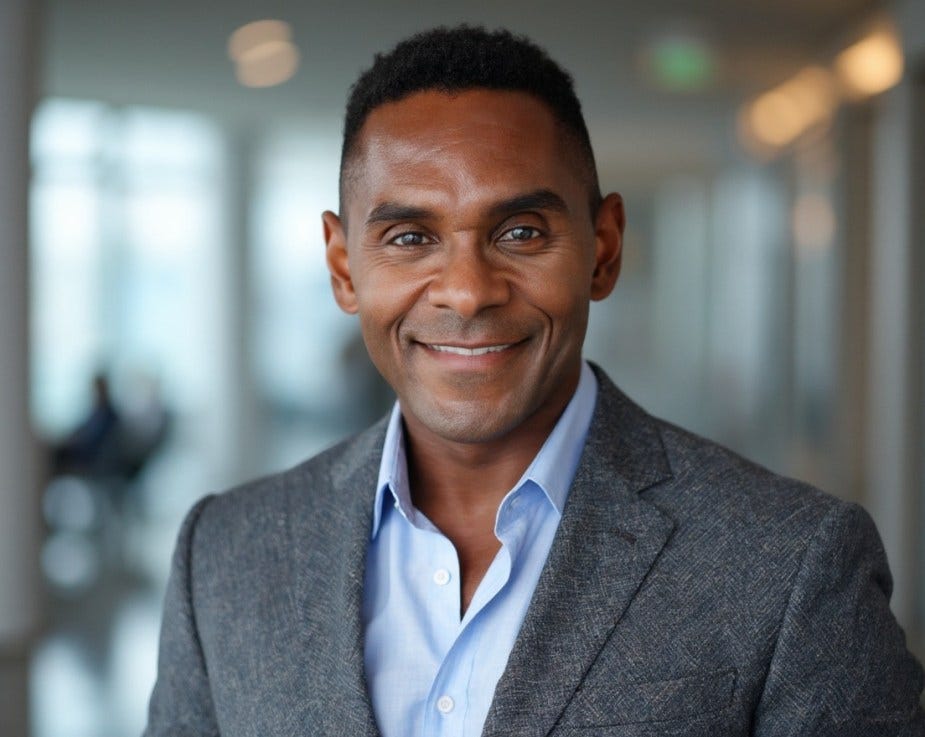
You watched your mother suffering during what you later understood was menopause, standing at an open window in a snowstorm, drenched in sweat, with no support and no answers. That moment clearly shaped everything that followed. What did it feel like, years later, to finally understand what she had been going through, and what do you wish someone had told her?
When I finally understood what my mom had been going through when I was a teenager, it honestly broke my heart. I remember her closing herself in her bedroom every night. Back then, we thought she just wanted privacy after being around people all day. But knowing now that she was silently suffering physically, mentally, and emotionally makes me look back at those moments very differently.
If I had known then what I know now, I would have checked on her more. I would have made dinner for her more. I would have tried to recreate some of the little things we enjoyed together when I was younger just to make her days a little easier.
What I wish someone had told her is that she was not crazy, weak, dramatic, or “just ageing.” She was going through a major hormonal and neurological transition that can affect every part of a woman’s body and mind. Unfortunately, many women from that generation suffered in silence because nobody explained what menopause actually was beyond hot flashes. So yes, that realisation is a huge part of why I wrote Decoding the 80 Symptoms and Side Effects of Menopause because I never want women to feel as confused and alone as my mom did.
You are a man who has dedicated his career to menopause education. The question you say everyone asks is: why? But I want to ask it differently, what has doing this work taught you about women that you don’t think you would have understood otherwise?
I actually grew up in a very unique environment. From the time I was born until about 11 years old, our home was periodically a safe haven for battered women and children. I was also very attached to my mother growing up, so I was constantly around women from different backgrounds and experiences from a young age.
As children, we hear and absorb everything. There are very few experiences women go through physically or emotionally that I did not witness or hear discussed growing up, from miscarriages to period flooding to chronic stress and exhaustion. Because of that, things that most men grow up seeing as “too much information” or “women’s issues” were simply normal conversations around me.
I think that environment taught me very early on to truly listen to women rather than dismiss or minimise what they’re saying. And when I entered the health and wellness space over 25 years ago, women naturally gravitated toward my teaching and coaching style because they felt heard. So, it’s more like women’s health and menopause found me instead of me finding menopause.
What this work has taught me is just how often women adapt to suffering instead of being supported through it. Women are incredibly resilient, but resilience should not require silent suffering. That’s another reason I focus so heavily on education and awareness, because once women understand what’s happening biologically, physically, cognitively, and emotionally, everything changes.
South Asian women are among the most underserved communities in the menopause conversation. From your experience working across diverse communities, what specific barriers do you see South Asian women facing that the mainstream menopause world still isn’t adequately addressing?
Living in Los Angeles and working with women throughout the city for over 20 years has allowed me to engage with women from diverse racial, cultural, and religious backgrounds. And many of the barriers South Asian women face overlap with Black women, Latina women, Middle Eastern women, Indigenous women, and many other communities as well.
The biggest barrier, from what women have told me, is often cultural silence. Conversations around hormones, mental health, vaginal health, sexual health, mood changes, or ageing itself can carry shame or discomfort in many households and communities. Women are often expected to quietly endure symptoms rather than openly discuss them.
There’s also the belief that symptoms are “just stress,” “just ageing,” or “just part of being a woman.” So women normalise suffering instead of recognising that many symptoms are connected to menopause.
In some South Asian families, specifically, there can also be strong expectations around caregiving, sacrifice, and endurance. Women are conditioned to prioritise everyone else while minimising their own needs, until, unfortunately, their quality of life is significantly impacted.
Another major issue is the lack of adequate education on menopause overall. Many doctors openly admit they were not properly trained in menopause care. Then online, women are bombarded with conflicting advice from influencers, gurus, anecdotal experiences, and product marketers. So many women are left overwhelmed and confused instead of informed. That confusion and lack of clarity are one of the biggest reasons I do this work and why I wrote the book.
In South Asian families, there is a deep cultural conditioning around silence, particularly around the body, health, and anything perceived as weakness. You work with workplaces, but the silence starts at home. How do you think the conversation around menopause needs to change inside South Asian families and communities, not just in HR departments?
What I see as a substantial part of the issue regarding the cultural conditions around menopause is that, for decades, it has largely been viewed through a reproductive and gynaecological lens instead of being recognised as a much broader life and health issue. Because of that, menopause often gets categorised as only a “women’s health issue,” which can make conversations around it feel private, shameful, or inappropriate to discuss openly in many communities, including within some South Asian families.
But menopause is much bigger than that.
Yes, menopause happens within a woman’s body, but its effects extend far beyond reproductive health. It can affect emotional health, cognitive function, sleep, relationships, confidence, communication, work performance, and overall quality of life. So whether people realise it or not, menopause impacts families, marriages, workplaces, and communities too.
That’s why I believe the conversation has to shift from silence and endurance to understanding and support.
Inside many South Asian families, women are often expected to quietly push through discomfort, especially when it comes to hormonal or emotional health. But understanding what’s happening in your body is not weakness. Asking for support is not a weakness either.
Education is empowerment.
And something worth noting, studies have shown that when women feel more supported and able to speak openly about menopause, symptom distress often decreases. That alone shows how powerful awareness, validation, and connection can be.
Your work focuses significantly on men understanding menopause, as well as on partners, colleagues, managers, and sons. For the South Asian men reading this, husbands, brothers, sons, colleagues, what is the single most important thing you want them to understand about what the women in their lives are going through?
Although I provide educational resources like ‘What Every Man Should Know About Menopause” and “Menopause Made Simple For Couples”, my work actually does not significantly focus on men understanding menopause. It’s definitely an extension of what I do. My main focus is providing educational resources for women so they can confidently advocate for the care, support, and resources they need with clarity and autonomy. But I do believe it’s important for men to understand what menopause actually is because they are part of these women’s lives.
What I want South Asian men to understand is this: the woman you love and care about is going through a biological transition affecting nearly every part of who she is physically, mentally, emotionally, cognitively, and hormonally. Many women don’t recognise themselves during this phase and often feel scared, isolated, frustrated, or overwhelmed.
She needs your support. She does not need you to “fix” menopause because you cannot fix menopause. What she needs is understanding, patience, compassion, and advocacy.
Support her. Nurture her. Love her. Listen to her. Help her feel safe talking about what she’s experiencing without judgment or dismissal.
Similarly, in workplaces. Male employers and coworkers don’t need to become menopause experts, but you can lead with understanding instead of judgment.
You document 80 symptoms of menopause. Many South Asian women have been experiencing multiple symptoms for years and were told it was stress, anxiety, or simply how they are. What happens, psychologically and physically, when a woman finally gets an explanation for what her body has been doing? What shifts?
When women finally understand that what they’ve been experiencing can actually be connected to menopause, it tends to completely change how they view what’s been happening to their bodies and their minds. Many women have spent years being told it’s “just stress,” “just ageing,” “just anxiety,” or simply part of who they are now. So they start questioning themselves instead of questioning whether hormones may be playing a part.
But when they finally connect the dots, it reduces a tremendous amount of fear, confusion, and self-blame. They stop thinking they’re lazy, irrational, overly emotional, or “losing it.” They begin to realise there may actually be a biological reason behind the brain fog, anxiety, exhaustion, sleep disruption, mood swings, joint pain, heart palpitations, or emotional overwhelm they’ve been experiencing.
One of the things I also see during menopause is that the autonomic nervous system can become much more sensitive, increasing feelings of stress, anxiety, and fight or flight responses. And when the body remains in that heightened state, symptoms often worsen. So when women finally feel understood, supported, educated, and less afraid of what’s happening, it can positively impact both their emotional well-being and even the severity of some symptoms.
I saw this often during my years coaching women through menopause.
There’s also a huge sense of validation. The feeling of being alone disappears once they realise millions of other women are experiencing similar symptoms too. And once you understand what may actually be happening, you’re finally able to start making informed decisions about support, symptom management, and the types of solutions that may be right for you.
You work extensively with organisations on workplace menopause. Many South Asian women are navigating menopause symptoms at work in silence, managing brain fog, fatigue, and anxiety while trying to appear completely competent. What would you say to the South Asian woman reading this who has never disclosed anything at work and is wondering whether she should?
For women experiencing symptoms at work, I personally would not recommend immediately disclosing any information at work unless you feel safe and comfortable doing so.
What I would recommend first is helping create awareness within the workplace itself. For example, sharing information about workplace education on menopause or suggesting a menopause awareness webinar or training can often open the door in a less personal way.
Sometimes simply saying, “I recently heard about menopause workplace training and thought it might be valuable for employees,” is enough to start the conversation.
The first step is usually education because once leadership and teams better understand menopause and its impact, conversations around support become much easier and less uncomfortable.
Unfortunately, many women are silently struggling through brain fog, anxiety, fatigue, sleep disruption, and emotional overwhelm while trying to appear fully functional and composed. The more normalised these conversations become, the safer women will feel asking for support when they genuinely need it.
The conversation about menopause has gained significant mainstream momentum in recent years. But from where you sit, what is still not being said, the gap that still exists in how menopause is understood, treated, and talked about, particularly for women from minority ethnic backgrounds?
I think one of the biggest gaps is that women are still not being taught how individualised menopause really is.
Many women are still searching for “the solution” instead of understanding that menopause symptoms can present very differently depending on genetics, stress levels, trauma history, lifestyle, metabolic health, sleep quality, nutrition, culture, environment, and underlying health conditions.
Women from minority ethnic backgrounds are also often underrepresented in research, underdiagnosed, or culturally conditioned not to speak openly about symptoms in the first place.
But that doesn’t stop you from learning all you can about what’s happening in your body and how you can get the support you need. Don’t wait for support to come to you.
You have said that your motivation is knowing how much of your mother’s suffering could have been minimised, prevented, or reversed. For the South Asian woman in midlife reading this, who is struggling right now and perhaps recognises herself in your mother’s story, what is the most important thing you want her to know?
For the South Asian woman in midlife reading this who is struggling right now. First, I want you to know that you are not crazy. You are not weak, you are not “just getting older,” and you are not alone. Millions of women are struggling physically, cognitively, emotionally, and hormonally just like you. The problem is that most of you were never properly educated on what menopause can actually look and feel like beyond hot flashes.
I also want women to understand that education has to come before decision-making. Before choosing supplements, medications, treatments, or lifestyle changes, first understand what may actually be happening in your body.
Maybe you need medical support. Maybe stress and anxiety are amplifying your symptoms. Maybe sleep disruption is creating a cascade effect. Maybe you need community and support more than another prescription. Every woman’s situation is different. So getting a foundational understanding of what’s happening in your body and why is imperative.
And again, that’s one of the biggest reasons I wrote my book, Decoding the 80 Symptoms and Side Effects of Menopause, because too many women are struggling with symptoms they don’t understand and are trying to make important health decisions without clear information. I want women to be able to connect the dots between the physical, emotional, and cognitive symptoms they’re experiencing while also understanding the different pathways available for reliable support and relief.

The Sattva Collective was founded on the belief that South Asian women deserve a midlife and menopause conversation that truly understands them. As someone who has championed menopause awareness across cultures and communities, what gives you hope that the conversation is changing? And what still needs to happen?
What gives me hope as someone championing this conversation is that more women are finally speaking up and sharing their experiences openly. That matters because the only way support improves is if people know support is needed and that women are not just requesting it, they are demanding it.
But there’s still a long way to go. We need more culturally specific conversations. More education for healthcare providers. More workplace awareness. More representation in research. More honest discussions around mental health, sexuality, cognitive symptoms, and emotional well-being during menopause.
And most importantly, women need to feel safe enough to speak openly without shame.
That’s why platforms like The Sattva Collective are so important. You are creating space for women to finally be heard, understood, and supported. I am genuinely honoured to be part of that conversation.
What strikes me most about this conversation is not just what Tafiq knows, but why he knows it. This is not a man who encountered menopause through research papers or professional curiosity. This is a man who watched his mother suffer in a way that, had someone simply explained it, might have been so much easier to bear. That’s where this work comes from. That’s what makes it land differently.
For South Asian women reading this: you are not crazy. You are not weak. You are not simply getting older or being dramatic. You are navigating a profound biological transition in a culture that has, for too long, asked you to do it in silence. And that silence has a cost. Tafiq has spent over two decades making sure women understand what that cost is, and what becomes possible when the silence finally ends.
His message to the South Asian men in our community, the husbands, brothers, sons, and colleagues, is equally clear: she does not need you to fix this. She needs you to show up. To listen, to not dismiss what you don’t fully understand, to love her through it.
That feels like something worth repeating.
If you’d like to connect with Mr Menopause and explore his work further, you can find him across your favourite channels:
Website: www.tafiq.com | YouTube: @MrMenopause | Facebook: @MrMenopauseOfficial | LinkedIn: @TafiqAkhir