


There are some conversations that feel urgent the moment they begin.
This is one of them.
Anushka Chaudhry is a Consultant Oncoplastic Breast Surgeon, one of a very small number of female breast surgeons in the UK, and the first female general surgeon appointed to Great Western Hospitals NHS Foundation Trust. She grew up in Wales as part of a South Asian minority community, rarely seeing anyone who looked like her in positions of leadership within medicine, let alone surgery. She trained, persisted, and arrived somewhere that, still, in 2026, not enough women who look like her have reached.
But what makes this interview exceptional is not the title. It is what sits beneath it.
Anushka founded Aurora Breast Cancer Wellbeing Charity because she recognised that excellent surgical care alone is not enough. She works with national and international faculty. She publishes, she educates, and she gives seminars to schools and businesses. And she is passionate, with the particular, focused passion of someone who has spent years watching South Asian women arrive at her clinic too late, with diagnoses that earlier intervention could have changed, about reaching the communities that mainstream healthcare consistently fails to reach.
South Asian women face specific and documented barriers to breast cancer screening. Language barriers. Cultural silence around the body. The fear of cancer is a taboo subject. Modesty concerns. Misconceptions about risk. And the particularly powerful myth that HRT causes breast cancer, a fear so pervasive that it is preventing women from seeking menopause support that could genuinely transform their quality of life.
Anushka does not shy away from any of it. She names it directly, addresses it with evidence, and asks South Asian women to do something that requires real courage in communities that have taught them to stay quiet about their bodies.
Get it checked. Know your normal.
This conversation could save lives. We mean that without hyperbole.
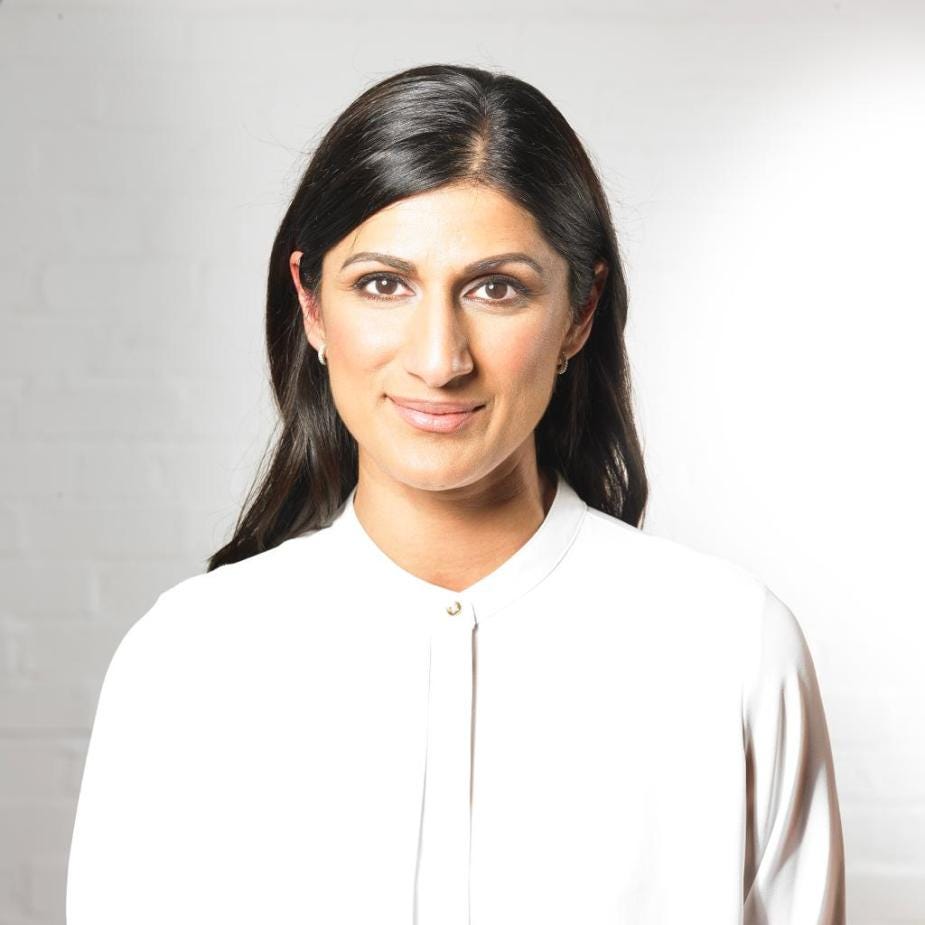
You are the first female general surgeon employed by Great Western Hospitals NHS Foundation Trust, a milestone that carries particular weight for South Asian women watching you. What did it take to get there, and what does your presence in that role represent to you personally as a South Asian woman in surgical medicine?
Growing up in Wales as part of a South Asian minority community, I rarely saw people who looked like me in positions of leadership within medicine, let alone surgery. The journey to becoming a consultant surgeon required years of training, resilience, sacrifice, and a willingness to challenge societal and professional expectations. Surgery has traditionally been a male-dominated speciality, and for many women, particularly those from ethnic minority backgrounds, there can be an additional burden of feeling that they must constantly prove themselves. Fortunately, my parents always instilled in me a strong sense of self-belief and a fearless approach to everything I set my mind to. I feel so lucky to have such support.
Being the first female general surgeon appointed to Great Western Hospitals NHS Foundation Trust is something I am proud of, but also something I view as a responsibility. Representation matters. When young South Asian women see someone who shares aspects of their background succeeding in a field that has historically lacked diversity, it helps expand their sense of what is possible. Personally, it represents progress, but it also reminds me that we still have work to do to ensure medicine and surgery reflect the communities we serve.
You are passionate about increasing breast cancer awareness, specifically among ethnic minority populations, and you are affiliated with national projects in this area. What are the most significant barriers you have identified that prevent South Asian women from engaging with breast cancer screening, and what does it cost them when those barriers are not addressed?
The barriers are often complex and interconnected. Language difficulties, limited access to culturally tailored health information, modesty concerns, fear of cancer, misconceptions about risk, and the belief that breast cancer is less common in South Asian women can all contribute to lower engagement with screening services.
There is also a tendency in some communities to avoid discussing breast health openly. When breast cancer is viewed as a taboo subject, women may delay seeking help when symptoms develop. The consequence is that cancers are often diagnosed at a later stage, when treatment can be more intensive, and outcomes may be poorer.
Early diagnosis saves lives. When barriers to screening are not addressed, women lose the opportunity for earlier treatment, less invasive surgery, and potentially better long-term outcomes. That is why community engagement, culturally sensitive education, and trusted conversations are so important.
Breast cancer risk changes at menopause, and yet the conversation about breast health and menopause is rarely had with South Asian women in a culturally grounded way. What do South Asian women in midlife need to understand about how their breast cancer risk evolves through the perimenopausal and postmenopausal transition?
One of the most important things women need to understand is that age itself is one of the strongest risk factors for breast cancer. The majority of breast cancers occur after the age of 50, which means risk naturally increases during and after the menopausal transition.
Many women assume that because their periods are becoming irregular or stopping, their focus should be solely on managing menopausal symptoms. While that is important, breast awareness should remain a priority. Women should continue attending screening appointments, understand what is normal for their breasts, and seek medical advice promptly if they notice changes.
At the same time, risk is influenced by many factors, including genetics, family history, weight, alcohol consumption, physical activity, and reproductive history. Menopause is therefore an opportunity to adopt a holistic approach to health, including breast, bone, and cardiovascular health, as well as emotional well-being.
HRT and breast cancer fear are perhaps the most significant barriers preventing South Asian women from seeking menopause support. Many women are refusing HRT because they believe it will give them breast cancer. As a consultant breast surgeon, what is the current clinical picture on HRT and breast cancer risk, and what do you want South Asian women to understand before making that decision from a place of fear?
The relationship between hormone replacement therapy and breast cancer is often misunderstood. Many women have heard simplified messages suggesting that HRT causes breast cancer, but the reality is much more nuanced.
For most healthy women under the age of 60, the benefits of HRT in managing significant menopausal symptoms often outweigh the risks. Different types of HRT carry different levels of risk. Combined oestrogen-progestogen HRT is associated with a small increase in breast cancer risk with longer-term use, whereas oestrogen-only HRT appears to carry a lower risk profile in appropriate women.
Importantly, the increased risk associated with some forms of HRT is relatively small and needs to be considered alongside other common risk factors such as obesity, alcohol consumption, and physical inactivity.
My message to South Asian women is simple: do not make decisions based on fear alone. Seek personalised medical advice, understand your individual risk profile, and make an informed decision based on evidence rather than myths. Untreated menopause symptoms can have profound effects on quality of life, relationships, work, sleep, and long-term health.
You founded Aurora Breast Cancer Wellbeing Charity, taking your work beyond the operating theatre into community and emotional support. What gap were you trying to fill, and how has that work shaped your understanding of what women, particularly South Asian women, actually need when they receive a breast cancer diagnosis?
I founded Aurora because I recognised that excellent surgical and medical treatment alone is not enough. A breast cancer diagnosis affects every aspect of a woman’s life: her family, relationships, confidence, mental health, sexuality, career, and identity.
Many women told us they felt unsupported once treatment ended. Others struggled to access practical information about exercise, nutrition, menopause, emotional well-being, and survivorship.
For South Asian women, there can be additional challenges. Some women feel isolated because cancer is not openly discussed within their communities. Others carry concerns about family responsibilities, body image, fertility, or cultural expectations.
Aurora was created to provide holistic support and to remind women that they are more than their diagnosis. Through this work, I have learned that women need information, but they also need connection, understanding, and a sense that they do not have to face cancer alone.
Oncoplastic surgery sits at the intersection of cancer treatment and reconstructive outcomes, preserving cosmetic and functional results wherever possible. For South Asian women, body image, modesty, and cultural attitudes to the body can make decisions around breast surgery particularly complex. How do you navigate those conversations with your patients?
Every woman’s priorities are different, and one of the most important parts of my role is listening. For some women, preserving breast shape is extremely important. For others, the priority is removing the cancer with the least possible future worry.
I ensure patients understand all available options, including breast-conserving surgery, mastectomy, and reconstruction where appropriate. We discuss the advantages, limitations, recovery, and expected outcomes of each approach.
Cultural sensitivity is vital. Discussions about breasts, body image, and sexuality can be difficult in some communities. It is also important for healthcare teams not to make assumptions based on people’s backgrounds, so I focus on educating colleagues. Creating a safe, non-judgmental environment allows women to express concerns they may never have voiced elsewhere. Ultimately, the goal is shared decision-making that respects both medical evidence and individual values.
South Asian women face specific challenges in breast cancer screening, including lower uptake of mammography, language barriers, cultural stigma around gynaecological and breast examinations, and a tendency to present later when symptoms are more advanced. What systemic changes would make the biggest difference in closing that gap?
We need healthcare systems to move beyond a one-size-fits-all approach. Community-based education delivered in multiple languages, partnerships with faith organisations and community leaders, culturally tailored awareness campaigns, and greater representation within the healthcare workforce would all help improve engagement.
We also need to improve health literacy and ensure information is accessible and relevant. Trust is crucial. When women hear health messages from people who understand their cultural context, they are more likely to engage. I have worked with a local charity called Changing Suits, set up by two sisters who do an excellent job of raising awareness of health issues in the South Asian community and working with local councils.
Most importantly, we need to bring conversations about breast health into everyday community spaces rather than expecting women to seek information independently.
You are also an educator, leading national and international faculty, giving educational seminars to businesses and schools, and publishing book chapters. What is the single most important message about breast health that you wish every South Asian woman, at every age, would hear?
Know your normal.
Breast awareness is not about checking your breasts in a particular way on a particular day every month. It is about understanding what is normal for your body and seeking medical advice if something changes.
Breast cancer can affect women of all backgrounds, all religions, and all communities. Early diagnosis remains one of the most powerful tools we have. Do not let fear, embarrassment, or cultural stigma prevent you from seeking help. If you notice a change, get it checked.
The Sattva Collective exists to ensure South Asian women in midlife are no longer invisible in the healthcare conversation. As a South Asian woman who has spent her career at the frontline of breast health, what gives you hope that the conversation is changing for our community, and what still needs to happen?
What gives me hope is that more South Asian women are speaking openly about health than ever before. Conversations about menopause, breast cancer, mental health, and wellbeing are becoming more visible, and organisations like Sattva Collective are helping to create spaces where women feel seen and heard.
I am also encouraged by the growing number of South Asian healthcare professionals, advocates, researchers, and community leaders who are championing change.
However, there is still much to do. We need more research that reflects the diversity of our population, more culturally competent healthcare services, and greater representation in leadership, policy, and education. Most importantly, we need to continue normalising conversations about women’s health.
No woman should feel invisible because of her ethnicity, culture, age, or background. If we continue to work together as communities, healthcare professionals, and advocates, I believe we can create a future in which every South Asian woman feels informed, empowered, and supported in making the best decisions for her health.
There is a phrase Anushka uses near the end of this conversation that I want to return to before we close.
No woman should feel invisible because of her ethnicity, culture, age, or background.
It sounds simple. It is not simple. For South Asian women in midlife, women who have spent decades navigating healthcare systems that were not designed with them in mind, carrying cultural silence around their bodies, managing the particular shame that many communities attach to the words cancer, menopause, and breast cancer, invisibility is not an abstract concept. It is the lived, daily reality.
What Anushka is doing, in the operating theatre, in the classroom, in the community halls, in the conversations she has with patients about things that are rarely discussed openly anywhere, is refusing to let that invisibility stand.
And what she is asking of South Asian women is deceptively simple and genuinely important.
Know your body. Attend your screenings. Do not let fear, embarrassment, or cultural stigma delay you from seeking help when something changes. Do not make decisions about HRT, or anything else, from a place of fear and misinformation when evidence-based, personalised advice is available.
And if you notice something, get it checked.
Early diagnosis remains one of the most powerful tools we have. And it is only possible when women show up.
To find out more about Anushka Chaudhry’s work:
Aurora Breast Cancer Wellbeing Charity, supporting women beyond their diagnosis with holistic care, community, and connection.
For breast health information and to find your local screening programme, visit breastcancernow.org or nhs.uk/conditions/breast-cancer
If you have noticed a change in your breast and are concerned, please contact your GP.