


There is a moment that Dr Farah Ahmed describes, almost in passing, but it stays with you.
A South Asian woman finally makes it to a dedicated menopause clinic. She has been to her GP multiple times over the years. She has been told her blood tests are normal. She has been treated for anxiety, iron deficiency, or depression. She has been reassured that there is no obvious medical explanation for how she feels.
And then, in this clinic, something shifts.
She is heard.
“By the time they reach a dedicated menopause clinic,” Dr Farah writes, “there is often a profound sense of relief, not only at receiving answers, but at finally feeling heard, understood, and having their experiences validated.”
That relief, the relief of a woman who has been carrying her symptoms for years, alone, largely unseen, is what this conversation is about.
Dr Farah Ahmed is a GP with a special interest in women’s health, working in a dedicated NHS menopause and women’s health clinic. She holds diplomas from the Royal College of Obstetricians and Gynaecologists and the Faculty of Sexual and Reproductive Healthcare, is a certified member of the British Menopause Society, and has contributed to Vogue, Women’s Health, and Condé Nast, taking evidence-based medicine out of the consultation room and into the mainstream media where women actually are.
Her message to every healthcare professional working with South Asian women is clear, direct, and long overdue: equitable care is not achieved by treating everyone the same. It is achieved by understanding that different women face different barriers. And until those barriers are built into service design from the outset, not treated as an optional extra, health inequalities will persist.
This is a conversation that the South Asian women in our community have needed a clinician to have publicly, in their language, for a very long time.
Dr Farah is that clinician.
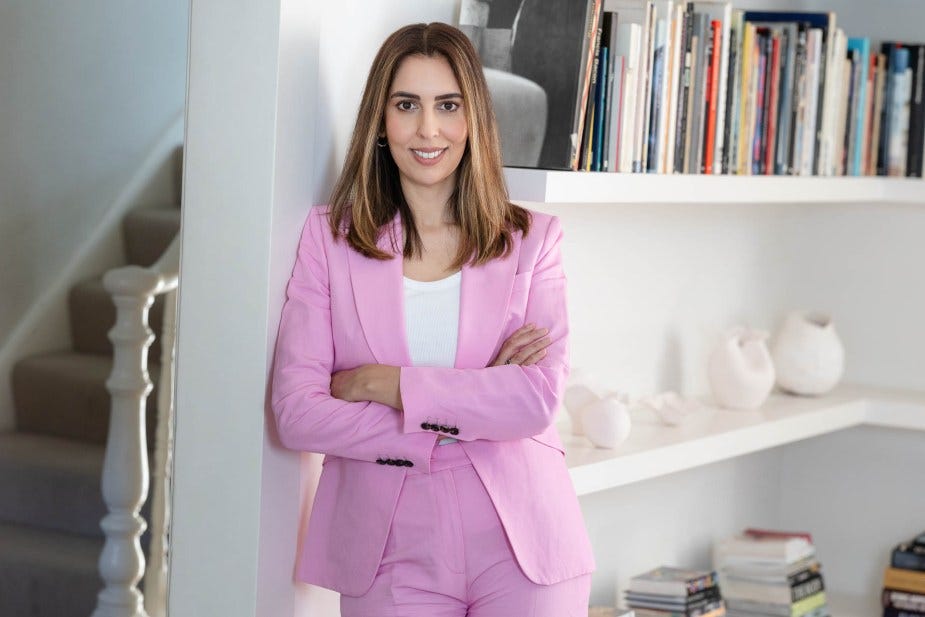
You work in a dedicated NHS menopause and women’s health clinic, which means you sit with the reality of what women are experiencing and what the healthcare system is and isn’t delivering for them, every single week. When South Asian women do finally make it into your consultation room, what are they most commonly carrying that has been unaddressed for far too long?
What strikes me most is how long many South Asian women have been carrying their symptoms alone before seeking help. By the time they reach my clinic, they are often exhausted, not just physically, but emotionally. Many have spent years normalising symptoms such as anxiety, low mood, sleep disturbance, joint pain, brain fog, heavy bleeding, loss of confidence, and low libido because they assumed these were simply part of getting older, stress, or something they should quietly tolerate.
I also see a profound lack of validation. Many women tell me that they have never discussed menopause openly with their mothers, sisters, or friends. In some families, there isn’t even a shared vocabulary for these experiences. As a result, women often arrive believing that what they are experiencing is unique to them or that they are somehow failing to cope.
Alongside the symptoms themselves, there is frequently an invisible burden of caregiving. Many South Asian women are simultaneously supporting children, ageing parents, extended family, and careers, while placing their own health at the bottom of the priority list. What has often gone unaddressed for far too long is not simply the menopause symptoms, but the woman’s belief that her wellbeing matters too.
What also stands out is that many women have not been absent from the healthcare system; they have often sought help repeatedly. Many have seen their GP several times over a number of years with symptoms such as fatigue, anxiety, low mood, poor sleep, brain fog, palpitations, or reduced confidence. Some have been treated for conditions such as iron deficiency or depression, which may well have been contributing factors, while others have been reassured that their tests are normal and that there is no obvious medical explanation for how they are feeling.
The challenge is that perimenopause remains a clinical diagnosis. There is no single blood test that can reliably confirm it, particularly in women in their forties whose hormone levels naturally fluctuate. As a result, many women can leave consultations feeling that their symptoms have not been fully explained or connected together as part of a broader hormonal transition. By the time they reach a dedicated menopause clinic, there is often a significant sense of relief, not only at receiving answers but also at finally feeling heard and understood and having their experiences validated.
You speak a lot about menopause through a cultural lens. What is the central message you want healthcare professionals in that room to leave with? And why is it still necessary to make this case in 2026?
My central message is that equitable care is not achieved by treating everyone the same; it is achieved by understanding that different women may face different barriers to accessing and benefiting from care.
We have made enormous progress in raising awareness of menopause, but awareness alone does not guarantee inclusion. Many of the resources, campaigns, educational materials, and even research studies that have shaped menopause conversations have historically centred on white, middle-class experiences. While these initiatives have been valuable, they have not always reflected the realities of women from ethnic minority communities.
In 2026, we still need to make this case because health inequalities persist. We know that South Asian women are less likely to access menopause support, less likely to receive evidence-based treatment, and more likely to encounter cultural, linguistic, and systemic barriers. If we genuinely want health for every woman, diversity cannot be an optional extra; it must be embedded into the design of services, education, research, and clinical practice from the outset.
South Asian women are significantly less likely to receive timely, appropriate menopause support. As a GP working at the frontline of that gap, what are the most significant barriers you see, and which ones do you believe are most within the healthcare system’s power to change?
The barriers exist at multiple levels.
At an individual level, many women do not recognise that their symptoms may be related to perimenopause or menopause. Cultural taboos, stigma around ageing, and limited opportunities for open discussion all contribute to delayed help-seeking.
At a healthcare level, I still see gaps in clinician confidence, variable menopause training, and a lack of culturally tailored resources. Too often, consultations rely on women already having the language and confidence to describe their experiences.
The encouraging thing is that many of these barriers are within our power to change. We can improve menopause education for healthcare professionals. We can ensure patient information is culturally relevant and accessible. We can engage communities directly rather than expecting women to find services on their own. We can diversify research participation and representation in public health campaigns.
Most importantly, we can create healthcare environments where women feel heard, respected, and understood from the moment they walk through the door.
Sexual health during and after menopause is one of the most significant and least discussed dimensions of this transition for South Asian women. What do you want South Asian women to know about their sexual health in midlife, and how do you create a consultation environment where these conversations become possible?
I want South Asian women to know that sexual health is a legitimate and important part of overall health. Vaginal dryness, discomfort during sex, recurrent urinary symptoms, changes in desire, and difficulties with intimacy are common during and after menopause, but they are not things women simply have to endure.
Many highly effective treatments are available, including vaginal oestrogen, lubricants, moisturisers, pelvic floor support, and broader menopause treatments where appropriate. The first step is recognising that these symptoms deserve attention.
In consultations, I try to create permission for the conversation. Rather than waiting for women to raise intimate concerns, I routinely ask about them in a matter-of-fact, non-judgmental way. Often, there is visible relief when women realise they are being asked because these symptoms are common and medically relevant, not because there is something unusual or embarrassing about them.
Trust is built through empathy, normalisation, and creating a space where women feel safe discussing topics that may have been considered taboo for much of their lives.
PMS and perimenopause share significant symptom overlap. How do you help women and their GPs distinguish between PMS, PMDD, and the early stages of perimenopause, particularly when women present with emotional symptoms rather than physical ones?
The key is understanding patterns.
PMS and PMDD symptoms typically occur during the luteal phase of the menstrual cycle and improve shortly after a period starts. Women often describe a predictable cyclical pattern, even if the symptoms are severe.
Perimenopause is different. Symptoms may become less predictable and can occur throughout the month. Women often notice changes in their menstrual cycle, alongside symptoms such as sleep disturbance, hot flushes, brain fog, anxiety, and reduced resilience to stress.
The challenge is that emotional symptoms frequently appear before the more widely recognised physical symptoms. Many women present with anxiety, low mood, irritability, or loss of confidence and do not immediately connect these changes to hormonal fluctuations.
Careful history-taking remains one of our most valuable diagnostic tools. Understanding symptom timing, menstrual patterns, and the broader clinical picture often provides far more useful information than a blood test alone.
You have contributed to Vogue, Women’s Health, and Condé Nast, using mainstream platforms to make health information more accessible. What does reaching women through media that they actually read, rather than clinical leaflets they don’t, allow you to do that the consultation room cannot?
A consultation changes one woman’s experience. The media can change thousands.
The reality is that most women spend far more time engaging with magazines, websites, podcasts, social media and mainstream media than they do sitting in a GP surgery. Meeting women where they already are allows us to start conversations earlier and reach those who may never actively seek health information.
The media also helps normalise experiences. When a woman reads about perimenopause, heavy periods, or vaginal symptoms in a publication she trusts, she often realises she is not alone. That recognition can be incredibly powerful.
My goal is always to translate evidence-based medicine into language that feels relatable, accessible, and relevant to everyday life. Good health communication should empower women, not overwhelm them.
Many South Asian women arrive at a GP appointment having already minimised their symptoms. As a GP, how do you draw out the full picture? And what would you say to South Asian women about how to advocate for themselves in that ten-minute window?
I often find that the symptom a woman mentions first is not necessarily the one affecting her most.
Creating space for the fuller story requires curiosity and active listening. I ask open questions, explore the impact symptoms are having on daily life, and pay attention to what is left unsaid. Often, once a woman feels heard, the consultation opens up considerably.
For South Asian women, my message would be simple: you do not need to earn the right to seek help. Your symptoms matter.
Before an appointment, write down your main concerns and prioritise the two or three issues having the greatest impact on your life. Be specific about how symptoms affect your work, relationships, sleep, mood, or ability to function. Those details help clinicians understand the true impact.
Most importantly, do not minimise your experience. If something is affecting your quality of life, it is worth discussing.
HRT remains one of the most misunderstood and feared interventions among South Asian women. What do you wish every GP in the UK understood about how to have the HRT conversation with South Asian women specifically?
Many South Asian women arrive carrying fears that have developed over years, sometimes decades. These concerns may stem from stories shared within families, experiences of serious illnesses such as cancer, misinformation online, or a broader cultural tendency to avoid medications unless absolutely necessary.
The starting point should not be persuasion; it should be understanding.
Before discussing treatment, I want to understand what the woman already knows, what concerns her, and where those concerns come from. Evidence-based reassurance is most effective when it addresses the individual’s specific fears rather than delivering generic information.
GPs should recognise that trust matters as much as knowledge. Women need time to ask questions, weigh risks and benefits, and make informed decisions that align with their values.
The goal is not to convince every woman to take HRT. The goal is to ensure every woman has access to accurate information and feels empowered to make a genuinely informed choice.
Your mission is to promote proactive, preventative care tailored to each woman’s needs. For South Asian women in their late thirties and early forties, what proactive steps would you encourage them to take right now?
My first recommendation is to start paying attention to your health before symptoms become disruptive.
Understand your menstrual cycle and notice changes. Prioritise regular physical activity, particularly strength training, which supports bone health, muscle mass, metabolic health, and long-term wellbeing. Focus on adequate protein intake, sleep, stress management, and cardiovascular health.
South Asian women already face increased risks of conditions such as type 2 diabetes and cardiovascular disease, so midlife is an important opportunity to invest in preventative health.
I would also encourage women to become menopause-literate. You do not need to wait until symptoms become severe to learn about perimenopause. Understanding what lies ahead can make the transition far less confusing and far less frightening.
Perhaps most importantly, start viewing your health as an investment rather than an afterthought.
If you could change one thing about how the NHS approaches menopause care for South Asian and ethnic minority women, one structural, cultural or clinical shift that would make the biggest difference, what would it be and why?
I would embed culturally competent women’s health care throughout the system rather than treating it as a specialist interest.
Too often, culturally sensitive care depends on individual clinicians who have developed expertise or awareness on their own. Equity should not rely on luck.
Every woman, regardless of her ethnicity, language, postcode, or socioeconomic background, should have access to healthcare professionals who understand how culture, identity, family dynamics, and health beliefs can shape menopause experiences and healthcare decisions.
If we can build services that are designed with diverse communities rather than simply delivered to them, we will move much closer to achieving genuinely equitable menopause care.
Ultimately, the goal is not simply better menopause care. It is ensuring that every woman feels seen, heard, and valued within the healthcare system.
I want to return to something Dr Farah says early in this conversation, because it is the thing I keep coming back to.
“What has often gone unaddressed for far too long is not simply the menopause symptoms. It is the woman’s belief that her well-being matters too.”
Read that again.
Because that sentence describes something that is not clinical. It is cultural. It is the accumulated weight of decades of messaging, from families, from communities, from a culture that placed South Asian women at the centre of everyone else’s care and rarely, if ever, asked about their own.
The menopause symptoms can be treated. There are consultations, medications, and therapies. What is harder to treat, and what The Sattva Collective was founded precisely to address, is the belief that a South Asian woman’s suffering is too small, too private, too inconvenient to name.
Dr Farah’s message to South Asian women is both clinical and deeply personal:
“You do not need to earn the right to seek help. Your symptoms matter.”
And her message to the healthcare professionals treating them is equally direct: trust matters as much as knowledge. Understanding where a woman’s fears come from matters. Building services with diverse communities, not simply delivering to them, matters.
The goal, she says, is not simply better menopause care.
“It is ensuring that every woman feels seen, heard, and valued within the healthcare system.”
That is the whole point.
To find out more about Dr Farah Ahmed’s work:
LinkedIn: Dr Farah Ahmed Instagram: @drfarahwomenshealth