


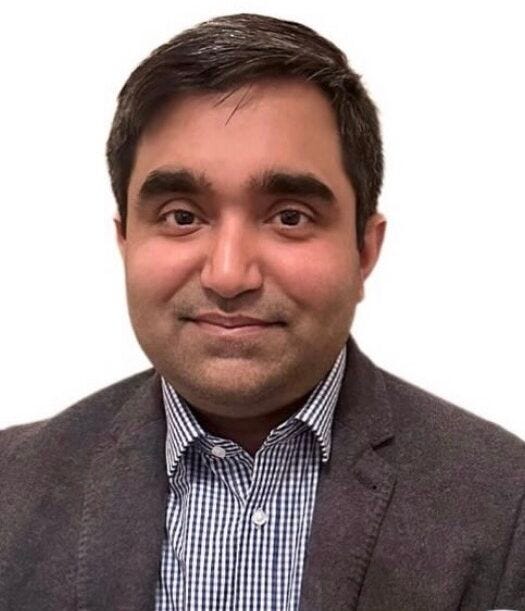
There are clinicians who treat menopause. And then there are clinicians who understand it. The difference is not always in the qualifications, though Dr Vikram Sinai Talaulikar has those in abundance. It is in the questions they ask. The silences they notice. The languages they speak. And the particular quality of attention they bring to a woman who has spent years being told that what she is experiencing is stress, or anxiety, or simply part of getting older.
Dr Vikram Sinai Talaulikar is a Consultant Gynaecologist and subspecialist in Reproductive Medicine at University College London Hospitals NHS Foundation Trust, one of the UK’s leading tertiary centres for women’s health. He trained in India before building a distinguished career in the UK, holds multiple specialist qualifications in reproductive medicine and menopause, and is a certified British Menopause Society Menopause Specialist who trains other clinicians in menopause care. He has published research on the underrepresentation of South Asian women in reproductive medicine research, a gap whose consequences, as he explains in this interview, are both clinical and deeply personal.
He also speaks Hindi, Marathi, and Konkani. That last detail is not incidental; it is central. Because when Dr Vikram speaks to a South Asian woman in her own language, something shifts in the consultation room. The appointment becomes more open. More honest. More emotional. Symptoms that have gone unnamed for years, genitourinary concerns, sexual health changes, the particular grief of a body that has been carrying too much for too long, finally find their way into the conversation. Language, as he says, changes everything.
This interview is one of the most clinically detailed and culturally specific conversations The Sattva Collective has published. Dr Vikram covers the earlier age of menopause onset in South Asian women, the non-classical symptoms that go unrecognised for years, the intersection of PCOS, diabetes, and cardiovascular disease with hormonal transition, the truth about HRT and the myths that keep women suffering unnecessarily, and the particular urgency of premature ovarian insufficiency in South Asian communities.
He also says something that we want every South Asian woman reading this to carry with them.
“You do not have to deal with the transition alone.”
You trained in India and have built a distinguished career in women’s health in the UK, specialising in menopause and reproductive medicine. How has that journey, straddling two cultures and two healthcare systems, shaped how you understand and approach the menopause experience of South Asian women specifically?
I consider myself lucky to have trained in India and then continued learning while practising in the UK. There is significant variation in menopause experiences across cultures and different geographical landscapes, and in how healthcare systems approach and provide services and support to women. In South Asia, women’s health conversations have traditionally focused on fertility, pregnancy, and family responsibilities, and menopause has often been seen as something women are simply expected to endure quietly as a natural part of ageing, even when it may be challenging for many women.
Menopausal symptoms like anxiety, sleep disturbance, joint pain, low mood, or even sexual health concerns may not be openly discussed or even recognised as menopause-related. Changes to bone and heart health that take place with menopause transition are not talked about enough, and opportunities are often missed to make lifestyle changes or consider treatment options that could improve quality of life and long-term health.
There remain myths and misconceptions about hormone replacement therapy for menopause, and there is a huge need for public awareness campaigns as well as healthcare professional education on menopause management.
In the UK, while menopause awareness and access to evidence-based treatment have improved significantly, I still see barriers to access among South Asian women. Even within a resourced healthcare system, cultural stigma, language barriers, intergenerational silence, and a tendency to normalise suffering can delay women seeking help. For many South Asian women, experiences around fertility, miscarriage, Gynaecological conditions, or family expectations around motherhood deeply shape how they experience the menopause transition. So it is important to be culturally sensitive when discussing menopause, considering the woman’s beliefs and perceptions, and involving the woman in decision-making about her health.
You have published research on the low participation rates of Asian women in reproductive medicine research. What did that research reveal about why South Asian women are so underrepresented, and what are the real consequences of that absence for the quality of care they receive?
It is true that South Asian women are not represented in sufficient numbers, especially when it comes to reproductive health research. There are both system and patient factors at play here. Researchers have been unable to reach these women due to communication gaps, the lack of involvement of community representatives, and language barriers. Women have faced barriers such as a lack of confidence in research processes, historical negative narratives about research, language/cultural barriers to participation, poor awareness of research opportunities and the fact that studies are not always designed or explained in ways that feel accessible to South Asian women. This needs to change. If South Asian women are underrepresented in research, then the evidence guiding treatment may not fully reflect their biology/physiology, benefit/risk profiles, beliefs, or unique lived experiences. That means their healthcare can become less personalised and less equitable.
As a certified menopause specialist and a trainer of other clinicians through the BMS and FSRH, you are shaping how the next generation of healthcare professionals approaches menopause care. What do you wish more GPs and gynaecologists understood about the specific needs, risk factors, and cultural context of South Asian women in midlife?
There are many things that are different about the midlife and menopause transition in South Asian women. These need to be factored in when assessing women who present for help or support during this transition. For example, their background medical risks, such as Polyendocrine metabolic ovarian syndrome (PMOS, also previously known as PCOS) or diabetes, could be high. This may impact their cardiovascular health in addition to the menopausal hormone changes.
They may reach menopause about 5 years earlier, on average, than the Caucasian population. They may present with non-classical non-vasomotor symptoms of menopause rather than hot flushes or night sweats (fatigue, poor sleep, joint pains, low mood, anxiety, weight changes, or loss of confidence, often after years of putting family needs before their own).
They may be more hesitant to talk about genitourinary symptoms or sexual problems. The prevalence of premature ovarian insufficiency or early menopause is higher in these women, and they may be at risk of osteoporosis. All these considerations and more will shape how we address the symptoms each woman presents with and what solutions best fit the person in front of us, rather than applying universal guidance, which may not always be appropriate for this group of women.
South Asian women have higher rates of cardiovascular disease, diabetes, and osteoporosis, all conditions that intersect significantly with the hormonal changes of menopause. How does this change the clinical conversation around menopause care for South Asian women, and is the mainstream healthcare system currently equipped to have that conversation?
For South Asian women, menopause is not just a hormonal transition; it intersects significantly with metabolic and bone health. Increased risks of PCOM, insulin resistance, diabetes, premature or early menopause, and cardiovascular disease during menopause need discussion in South Asian women, and menopause consultation is the ideal time to address these risks and put in place measures to prevent future ill health. Clinical consultation should cover: blood pressure measurement, diabetes risk assessment, cholesterol check, weight/BMI/waist circumference, healthy diet, protein/vitamin D and calcium intake, weight-bearing exercise, sleep hygiene, and psychological well-being.
A healthy lifestyle is key to future good health, and women need to be supported in looking after themselves and prioritising their own health. Currently, I do not think the mainstream health systems across the world are always equipped to have those conversations and provide support and regular follow-up during the menopause transition. Consultations are often too short, and cultural context is easily missed. We need a more proactive, preventative, and culturally informed approach.
Many South Asian women arrive in your clinic having minimised their symptoms for years, told by GPs, and sometimes by their own families, that what they are experiencing is stress, or anxiety, or simply part of getting older. What does it mean clinically when a woman’s menopause goes unrecognised and unsupported for that long?
When menopause symptoms are unrecognised for years, women can lose confidence in their own bodies and in the healthcare system. They may suffer from vasomotor symptoms, anxiety, depression, insomnia, pains, and vaginal/bladder problems for a long time without anyone joining the dots. This will mean they suffer from a poor quality of life and may face problems at work or in their relationships without help and support. Women who have medically or surgically induced menopause have an even more challenging time due to the sudden stopping of hormones. There are a number of lifestyle, non-hormonal, and hormonal interventions that can improve quality of life and preserve long-term health during menopause. When it comes to lifestyle and HRT interventions, the earlier these are instituted, the more the long-term benefits! Delay in interventions could mean that various body systems experience menopausal hormone-related changes, which may not always be reversible in the long term.
HRT remains a source of significant fear and misinformation within South Asian communities; stories about cancer, strokes, and risk are passed between women without a medical context. What do you want South Asian women to understand about HRT, and how do you approach those fears in a clinical setting with a patient who arrives deeply reluctant?
I want South Asian women to know that HRT is not a rigid, single treatment and is not dangerous. There are various types of HRT with their individual benefits, side effects and risks, and for the majority of women who wish to take HRT for quality of life, the benefits outweigh the risks. The benefits and risks of HRT depend on the woman’s age, health history, type of HRT, route of administration, and timing. There are many fears and myths associated with the use of HRT, for example, the risk of blood clots and cancers, and many of these arise from some of the old studies that were published about 20 years ago.
However, the situation has changed over the past 2 decades with the availability of modern, safer HRT preparations, which can be individualised based on a woman’s unique circumstances to suit her best. For women with premature or early menopause, replacing hormones using HRT is the gold standard treatment to preserve their quality of life and future bone, heart, and cognitive health. When a patient is fearful, it is important never to dismiss that fear, to explore its origins, to explain the evidence clearly, and to personalise the discussion. Not all women need to take HRT or wish to take HRT, but it should certainly not be denied to those for whom the benefits outweigh the risks.
You speak Hindi, Marathi, and Konkani. Has being able to speak to patients in their own language changed what they tell you and what you can discuss? What does language access actually unlock in the context of menopause care?
Yes, language changes everything. Knowing different languages is a huge advantage in clinical settings. When I speak to women in Hindi, Marathi, or Konkani, the consultation often becomes more open, more emotional, and more honest. The connection and trust are immediate!
Patients will often describe symptoms, fears, and sensitive or intimate health concerns in their own language, which they may not otherwise do easily in another language. Also, explaining the benefits and risks of medical interventions becomes easier when speaking with women in their language of choice.
Premature ovarian insufficiency, menopause before the age of 40, affects South Asian women, and yet it is rarely discussed within South Asian communities. What should South Asian women and their families know about premature menopause, and why does early recognition matter so profoundly?
The prevalence of premature ovarian insufficiency (below 40) and early menopause (below 45) is higher in South Asian women. This not only causes symptoms and impacts quality of life but also causes infertility and increases the risks of osteoporosis, heart disease, diabetes, and cognitive problems in later life. Replacing hormones via HRT is key for most women, besides
lifestyle changes to protect bone and heart health. Risks from HRT, which are applicable to women who start after the age of 50 (such as a slight increased risk of breast cancer) do not apply to women with premature or early menopause until the age of 50 and hence benefits far outweigh any risks. Early recognition and treatment are important to prevent changes in the heart, blood vessels, and bones, which may become irreversible over time. Diagnoses such as premature menopause can be life-changing and challenging, and associated with stigma. Good psychological support is crucial in this situation.
The Sattva Collective was founded on the belief that South Asian women deserve menopause and midlife support that truly understands their cultural context, not just their hormones. As a clinician, what do you believe community-led organisations like ours can do that clinical settings simply cannot?
Given the barriers women from certain communities face in accessing support and evidence-based care or advice on menopause transition, community-led organisations can do something clinics often cannot. They can play a vital role by creating awareness, normalising conversations in a culturally sensitive way, challenging stigma, involving patients and families in supporting themselves, and speaking/conducting in culturally familiar ways. They can serve as a bridge between patients and healthcare systems, improving everyone’s access to the right treatments and support. Organisations like The Sattva Collective can build trust, provide education, and foster a sense of belonging, which often allows women to finally seek help when they need it.
If you could say one thing directly to the South Asian woman reading this who suspects she is in perimenopause, who has not yet sought help, who is managing alone, what would it be?
I would say that if you think you are in perimenopause, you are likely not imagining it, and there are so many options you could consider for symptom relief and protection of long-term health. You do not have to deal with the transition alone, as perimenopause, with its symptoms, can affect your body, mind, relationships, work, confidence, and sense of self. Also, it is not just about replacing hormones; there are many lifestyle and other non-hormonal alternatives that can help. Seeking help is not a sign of weakness, and it could make a huge difference to your quality of life and future health. So do not suffer in silence and take the next step to seek help if you wish to discuss your symptoms and consider interventions to support yourself.
Near the end of this conversation, Dr Vikram is asked what he would say to the South Asian woman who suspects she is in perimenopause, who has not yet sought help, and who is managing alone.
His answer is direct, warm, and clinically precise all at once.
“You are likely not imagining it.”
Four words. But for a South Asian woman who has spent years being told that her symptoms are stress, or anxiety, or simply ageing, who has minimised herself in consultation rooms, who has been reassured that her tests are normal when her experience was anything but, those four words carry the weight of every dismissed appointment, every symptom she talked herself out of naming, every time she went home from the GP and tried harder to cope.
You are not imagining it.
What Dr Vikram makes clear across this entire conversation is that South Asian women do not face a single barrier to menopause care. They face a system of interlocking barriers, cultural silence, language gaps, underrepresentation in research, clinicians who have not been trained in the cultural context, and consultations that are too short to hold the complexity of what these women carry.
And yet within all of that, there is something he returns to again and again: the possibility of change. Through community-led organisations that build trust before a woman ever enters a clinical setting. Through clinicians who speak the right language, literally and figuratively. Through women who finally allow themselves to seek the help they deserve.
“Seeking help is not a sign of weakness. It could make a huge difference to your quality of life and future health.”
If you have been managing alone, this conversation was written for you.
The next step is yours.
To find out more about Dr Vikram Sinai Talaulikar’s work:
Menopause Clinic London: menopausecliniclondon.co.uk
The Luna Clinic: thelunaclinic.com
UCLH: uclh.nhs.uk