


For years, we have been taught to think about menopause through a relatively narrow lens. Hot flushes. Night sweats. Sleep. Mood. Periods. Hormones.
But what if there is a much bigger conversation we need to be having?
For Dr Nelum Dharmapriya, that conversation is metabolic health.
A GP with more than 30 years of experience, Nelum spent decades listening to women describe symptoms that were often treated as individual problems: weight gain, increasing abdominal fat, poor sleep, brain fog, low energy, anxiety, and the feeling that they simply weren’t themselves anymore. Then, in her late 40s and 50s, she began experiencing many of those same changes.
She was also becoming pre-diabetic.
It was a personal turning point. Rather than continuing to treat each symptom separately, Nelum began joining the dots between insulin resistance, menopause, muscle, sleep, stress, nutrition, and lifestyle. She changed the way she lived, reversed her pre-diabetes and transformed her own metabolic health. Five years on, she has sustained those changes, and that experience has profoundly influenced the way she now practises medicine.
As a Sri Lankan woman who has lived and worked across Sri Lanka, the UK and Australia, Nelum also brings a deeply personal understanding to the conversation around South Asian women’s health. South Asian women can develop metabolic conditions such as type 2 diabetes and cardiovascular disease at younger ages and at lower BMIs, making this a conversation we cannot afford to postpone.
In this conversation, we talk about what is really happening to women’s metabolic health during the menopause transition, why the 40s can be such an important window for prevention, and why being slim doesn’t necessarily mean being metabolically healthy.
We talk about belly fat without body shame, the complicated relationship between South Asian food and metabolic health, and why we don’t need to abandon our culture in order to look after our bodies.
We also talk about the women who spend decades looking after everyone else while their own health quietly slips down the list, and what it means to finally put ourselves back on it.
Because perhaps menopause isn’t simply something we need to get through.
Perhaps it is a moment when we can stop, pay attention, and make decisions that could change the decades ahead.
Let’s talk to Dr Nelum Dharmapriya.
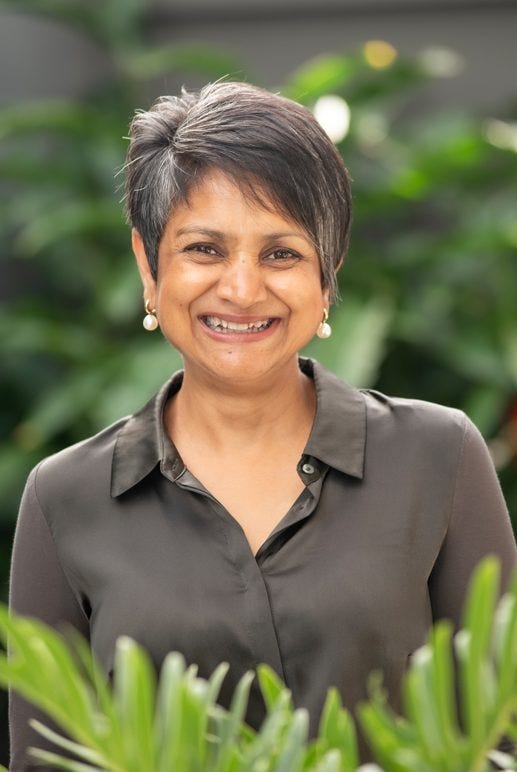
You’ve spent more than 30 years working as a GP, and your focus has increasingly moved towards women over 40, menopause, and metabolic health. What did you begin seeing in women at this stage of life that made you want to look beyond simply treating individual symptoms?
I think what changed most was actually my own experience.
In my late 40s and 50s, I began experiencing many of the things I had heard women talk about in my consulting room for years. Weight gain, increasing belly fat, brain fog, poor sleep, reflux, bladder problems, snoring, loss of energy. I was also becoming pre-diabetic.
And yet, like many women, I was dealing with each thing separately. One problem, one solution. That is very much how medicine is often practised.
It was only when I started learning more about insulin resistance and metabolic health that I began joining the dots. I changed the way I ate, started prioritising strength training, sleep and stress, and reversed my pre-diabetes. My metabolic health completely changed, and five years later I have sustained that change.
That experience changed the way I practise medicine.
I began looking at the women coming through my door differently. A woman might come in because she isn’t sleeping. Another because she has gained weight around her middle. Someone else because her cholesterol or blood sugar is creeping up. Another because she is exhausted, anxious, or simply says, “I just don’t feel like myself anymore.”
Instead of seeing ten unrelated symptoms, I began asking: what is happening underneath all of this?
That question has really shaped the work I do now.
Menopause is often talked about in terms of hot flushes, sleep disruption, and hormonal symptoms, but you’re particularly passionate about metabolic health. What actually happens to a woman’s metabolic health during the menopause transition, and why should women be paying attention to it in their 40s rather than waiting until something shows up on a blood test?
I often say that menopause is about so much more than hot flushes.
As oestrogen begins to fluctuate and eventually decline, we see changes in where women store fat, particularly an increase in abdominal and visceral fat. We can lose muscle more easily. Insulin sensitivity can worsen. Cholesterol and blood pressure can change.
Then add the realities of midlife — poorer sleep, stress, less movement, perhaps more alcohol, years of putting everyone else first, and suddenly you have the perfect environment for metabolic health to deteriorate.
The important thing is that this often begins long before a woman is diagnosed with anything.
You can have insulin resistance for years while your fasting glucose still looks “normal”. That is why I don’t want women waiting until somebody tells them they have diabetes or high blood pressure before they start thinking about their metabolic health.
Your 40s are actually an incredible window of opportunity.
What you do during this period can influence how you enter your 50s, 60s, 70s, and beyond. I would love women to see menopause not just as something to get through, but as a time to invest in the health of their future selves.
South Asian women have a higher risk of conditions such as type 2 diabetes and cardiovascular disease, and you’re particularly interested in insulin resistance. Why is this such an important conversation for South Asian women in midlife, and what do you wish more women understood about their individual risk?
This subject is incredibly close to my heart because I am a South Asian woman myself.
I grew up in Sri Lanka, studied and worked in the UK, and now practise medicine in Australia. I understand our food, our families and our culture because I have lived them.
South Asians can develop insulin resistance, type 2 diabetes and cardiovascular disease at younger ages and at lower BMI than many other populations. You don’t necessarily have to look overweight to be metabolically unhealthy.
That last point is so important.
We have been conditioned to equate metabolic health with body size. A South Asian woman may look relatively slim and think, “Diabetes isn’t something I need to worry about.” Meanwhile, she may be accumulating visceral fat around the organs and becoming increasingly insulin resistant.
And then menopause can add another layer of metabolic vulnerability.
I want South Asian women to know their family history, know their waist measurement, know their blood pressure, glucose, and lipids, and have conversations with their doctors about their individual risk.
But I also want this message to be hopeful. Genetics may load the gun, but lifestyle has an enormous influence on what happens next. There is so much we can do.
Weight gain around the middle can be one of the most frustrating changes of midlife. How much of this is related to hormonal changes, ageing, muscle loss, lifestyle, and metabolic health, and how can we talk about abdominal weight without sending women straight back into the cycle of dieting and body shame?
I think the first thing we need to do is stop making women feel that belly fat is some personal failure.
There are real physiological changes happening.
Oestrogen changes where we tend to store fat. We gradually lose muscle as we age unless we actively work to preserve it. Sleep can deteriorate, stress can increase, and insulin resistance can make it easier to store energy around the abdomen.
So my conversation isn’t, “You need to lose weight.”
It is: “How can we improve your metabolic health?”
That might mean building muscle, eating enough protein, reducing foods that are driving hunger and blood-sugar swings, sleeping better, managing stress, and moving more.
I also encourage women to shift their attention away from the scales.
Can you lift heavier things than you could six months ago? Has your waist measurement changed? Are you sleeping better? Do you have more energy? Is your blood pressure improving? What are your blood markers doing?
Those are much more interesting measures of health than a number on the bathroom scale.
I want women to become stronger, not smaller.
You founded Whole Food Revolution and speak extensively about metabolic health and nutrition. There is currently an enormous amount of debate around carbohydrates, fasting, low-carb diets, and blood sugar. Where do you stand on these approaches, and how can women distinguish genuinely useful metabolic-health advice from another wellness trend?
I don’t believe there is one perfect diet for every woman.
I personally transformed my metabolic health through a lower-carbohydrate, whole-food way of eating, and I have seen it work extremely well for many patients, particularly those who are insulin resistant.
But “low carb” should never mean that everybody has to eat exactly the same way.
Start with real food.
Prioritise good-quality protein. Eat plenty of nutrient-dense whole foods. Reduce sugar, refined carbohydrates and ultra-processed foods. Then think about how much carbohydrate your body can tolerate according to your metabolic health, activity, preferences and culture.
Fasting is similar. It can be a useful tool, but it isn’t magic, and it isn’t appropriate for everybody. I don’t want women white-knuckling their way through hunger because somebody on Instagram told them that an 18-hour fast is the secret to health.
The question I always come back to is: can you live this way?
If an approach makes you frightened of food, requires enormous willpower, isolates you from your family, or cannot survive a holiday, birthday or dinner with friends, it probably isn’t a sustainable health strategy.
The best approach is the one that improves your health and that you can actually live with.
South Asian food is sometimes portrayed as the problem when conversations turn to diabetes, weight and metabolic health. As a Sri Lankan woman yourself, how do we have a more nuanced conversation about our traditional foods, cooking practices, and cultural relationship with food without blaming our culture for our health?
This is something I feel very strongly about.
I love South Asian food. Food is family, celebration, hospitality, memory, and love. I don’t want somebody telling a Sri Lankan woman that the answer to better health is to stop eating Sri Lankan food and live on chicken breast and salad.
At the same time, we have to be willing to look honestly at what has happened to our diets.
Some of what we now think of as “traditional” eating has changed enormously. We have much greater access to refined carbohydrates, sugar, snacks, sweet drinks and ultra-processed foods, while many of us are far less physically active than previous generations.
So instead of saying, “Your culture is the problem,” I prefer to ask, “How can we work within your culture?”
Perhaps we change the proportions on the plate. More protein, vegetables, and healthy fats; less rice or fewer refined carbohydrates. Perhaps we rethink breakfast. Perhaps we don’t need rice, dhal, potatoes, and bread all in the same meal. Perhaps sweets return to being something genuinely special rather than everyday food.
You don’t have to abandon your culture to improve your metabolic health.
We need to adapt the strategy to the person, not ask the person to abandon who they are.
Many South Asian women spend decades caring for everyone else while their own health quietly moves down the priority list. From your experience as a GP, what are the warning signs that a woman may be putting her own health on the back burner, and what are the health checks or conversations she shouldn’t be postponing?
I see this all the time.
Women will make appointments for their husbands, take their parents to specialists, remember their children’s health checks, and somehow years go by without anybody really looking at them.
Sometimes the warning signs are quite subtle: persistent tiredness, poor sleep, increasing waist circumference, reduced strength, rising blood pressure, changes in periods, urinary symptoms, low mood, anxiety, brain fog, or simply feeling that something isn’t quite right.
Please don’t dismiss everything as “I’m getting older.”
And don’t wait until you are sick to have a relationship with your doctor.
Midlife is a good time to review blood pressure, glucose and diabetes risk, cholesterol and cardiovascular risk, cervical and breast screening, bone health where appropriate, and your individual family history and risk factors.
And please talk about menopause.
There is so much more we can offer women now, including lifestyle interventions and, for appropriate women after an individual assessment, menopausal hormone therapy.
Looking after yourself is not taking something away from your family. Your health matters too.
There can be a huge gap between knowing what we should do and actually being able to change our lives. After three decades in medicine, what have you learned about helping women make lifestyle changes that are realistic, sustainable, and compatible with family life, work, culture, and everything else they are carrying?
This has probably been one of my biggest lessons in medicine.
Information alone doesn’t change behaviour.
Most women already know they should eat better, exercise, sleep more, and manage their stress. Telling someone what they already know doesn’t necessarily help them do it.
We need to understand what is getting in the way.
What are the habits? What is happening when you’re stressed? Are you eating because you’re hungry or because you’re exhausted, lonely, angry, or overwhelmed? What does your family expect? What beliefs have you carried about food since childhood? What happens when life gets difficult?
At Whole Food Revolution, this is why we bring the science together with mindset and behaviour change. You need to understand what is happening in your body, but you also need practical strategies that fit your actual life.
Start small.
You don’t have to transform your entire life on Monday morning. Change breakfast. Walk after dinner. Start lifting weights twice a week. Go to bed half an hour earlier. Stop buying the food you know you can’t leave alone.
Small things done consistently become incredibly powerful.
Health isn’t created by what you do perfectly for three weeks. It’s created by what you can keep doing for years.
We often talk about menopause as though it is an inevitable period of decline, when in reality it can also be a powerful point of intervention for our future health. If a woman in her 40s is listening and thinking, “I feel fine; why do I need to worry about metabolic health now?”, what would you want her to understand?
I would say: wonderful. You feel well. Let’s keep you that way.
Preventative medicine isn’t about frightening healthy people into thinking something is wrong with them.
It’s about understanding that many chronic diseases don’t suddenly appear at 55 or 60. The metabolic changes that eventually lead to diabetes, cardiovascular disease, fatty liver, or loss of physical function can be developing quietly for years.
Your 40s give you time.
Build muscle now. Protect your bones now. Learn how your body responds to food now. Prioritise sleep. Know your blood pressure, waist measurement, and metabolic markers. If you’re experiencing symptoms of perimenopause, talk to someone who understands it rather than simply struggling through.
I think we need to completely change the story around midlife.
This doesn’t have to be the beginning of decline.
For many women, it can be the beginning of becoming stronger, healthier, wiser, and much more intentional about how they want to live the second half of their lives.
Finally, if you could sit down with a South Asian woman in midlife who feels overwhelmed by conflicting advice about menopause, food, weight, and her future health, what would you want her to know — and what is the one thing you would encourage her to do differently from this point forward?
I would probably start by saying, “You don’t have to fix everything today.”
I know how overwhelming it can feel. I have been that woman.
Five years ago, I was pre-diabetic and metabolically unhealthy despite being a doctor. I had spent decades looking after other people’s health, yet there were things happening in my own body that I hadn’t properly understood.
Changing my metabolic health changed much more than my blood results. It changed how I sleep, how I move, how I think about ageing and what I believe is possible in this stage of life.
So if I could encourage one thing, it would be this:
Become curious about your own health.
Don’t simply accept that weight gain, exhaustion, brain fog, poor sleep, and declining health are inevitable because you’re getting older. Ask questions. Understand your metabolic health. Learn about menopause. Build muscle. Eat food that nourishes you. Find people who support you.
And then choose one thing you can change and start there.
You don’t need perfection.
You need a direction.
Midlife isn’t the end of your story. It may actually be the moment you finally start putting yourself back into it.
What stays with me from my conversation with Nelum is the idea that midlife gives us time.
Time to notice what is changing. Time to ask better questions. Time to build muscle, protect our bones, understand our metabolic health, improve our sleep, and make choices that support the woman we want to become.
And that feels particularly important because so many of us have been taught to wait until something is wrong before we pay attention.
We wait for the diagnosis. We wait for the blood test to become abnormal. We wait until the exhaustion becomes impossible to ignore. We wait until our body is shouting before we listen.
Nelum’s message is different: don’t wait.
Not because women should become anxious about every change in their bodies, but because prevention gives us something incredibly valuable: choice.
Her own story makes that message even more powerful. She was a doctor who was becoming pre-diabetic and experiencing changes in her own body, and it was only when she began looking at the bigger picture that she could see how the pieces connected. That shift didn’t just change her blood results. It changed the way she slept, moved, aged, and thought about what was possible for her future.
There is also something important in the way she talks about South Asian women and food. Our culture isn’t the problem. Our food isn’t something we need to be ashamed of. We can look honestly at changing diets, refined carbohydrates, sugar, and increasingly sedentary lifestyles without turning our heritage into the villain.
We can adapt without abandoning who we are.
And perhaps that is the bigger message running through this conversation: we don’t have to wait for our bodies to become a problem before we start caring for them.
We can become curious.
We can know our numbers. We can ask questions. We can build strength. We can nourish ourselves. We can seek help when something doesn’t feel right. We can make small changes that fit the life we actually live.
And we can stop believing that ageing automatically means decline.
Because our 40s and 50s aren’t simply years to survive.
They can be the years when we become more informed, more intentional, and more fiercely protective of our future selves.
Midlife isn’t the end of the story.
It might be the moment we finally start putting ourselves back into it.