


What if nourishment in midlife had less to do with taking things away and much more to do with giving ourselves what we need?
For so many women, particularly South Asian women, food has always been about far more than nutrition. It is love. It is family. It is celebration, memory and culture. And yet, many of us have also grown up surrounded by messages about our bodies, our weight and the foods we should feel guilty for eating.
As we enter midlife, those messages can become even louder. Our bodies change. Our energy shifts. Sleep can become elusive. Weight and body composition can change in ways we don’t always understand. And suddenly, the woman who has spent decades feeding everyone else can find herself wondering how to nourish herself.
Zohrain Jetha, Founder of Nourish Her Menopause CIC, believes we need to change that conversation.
For Zohrain, nourishment isn’t about following a perfect menopause diet or creating another list of foods women should avoid. It’s about understanding what our changing bodies need, learning how to make the food we already eat work harder for us, and moving from restriction towards addition.
In this conversation, we talk about the strengths already sitting on a South Asian plate, why our cultural foods don’t need to be abandoned in the name of health, and how we can support our bodies through perimenopause and menopause without turning food into another source of fear or guilt.
We talk about body image and the pressure women face to keep shrinking themselves as they age. We talk about the invisible labour of caring for everyone else. We talk about nervous system regulation, community and the importance of learning to listen to our bodies.
And perhaps most importantly, we talk about what happens when we stop seeing our bodies as something to fix and begin seeing them as something worthy of respect, care and nourishment.
Because maybe the question isn’t, What do I need to cut out?
Maybe it’s, What does my body need from me now?
Let’s talk to Zohrain.
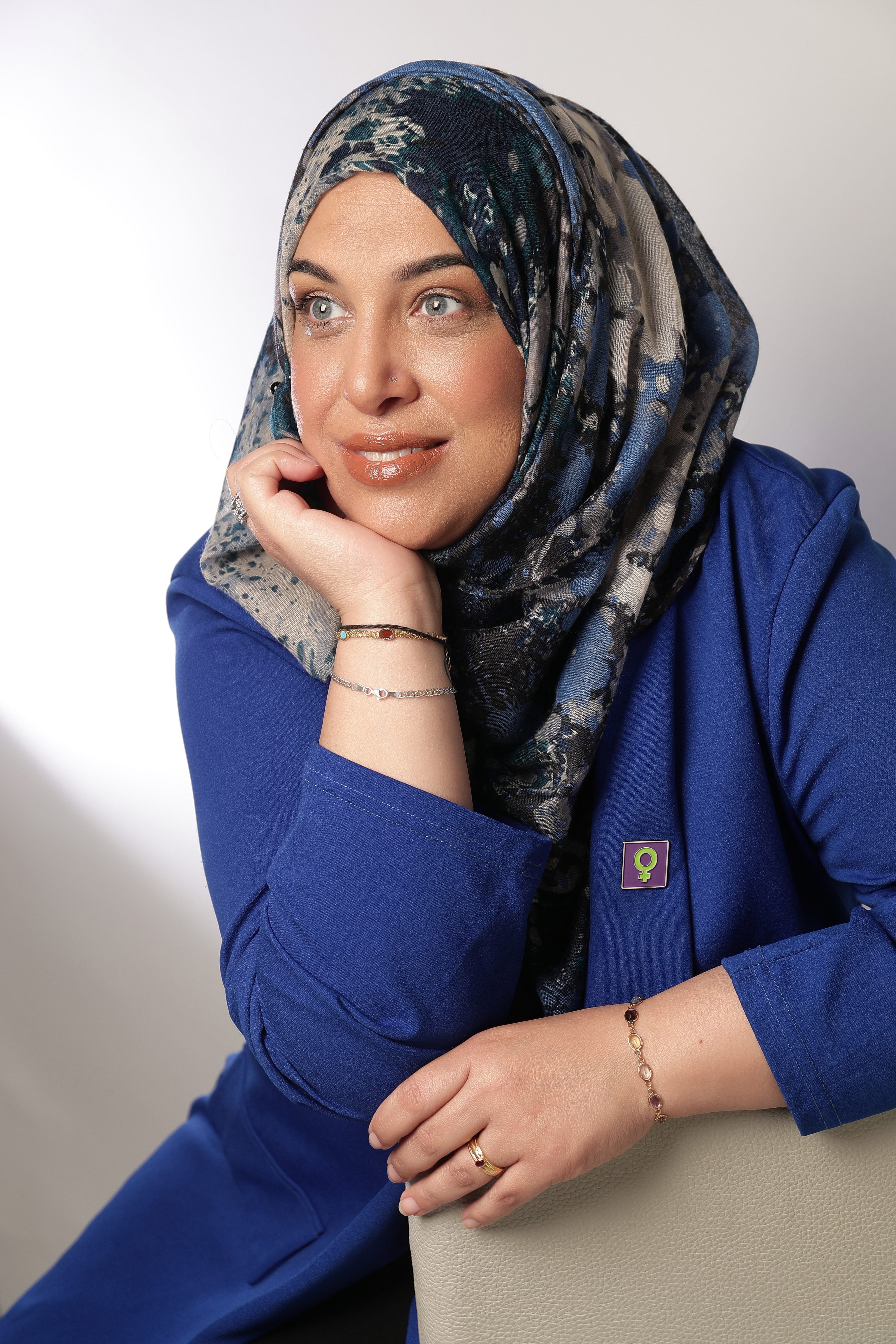
Let’s start with the word nourishment. It can mean so much more than what we put on our plate. What does true nourishment look and feel like to you, particularly for a woman in midlife?
To me, nourishment is about so much more than simply what we eat. It’s about learning to listen to our body, understanding what it needs, and caring for it in a way that allows the food we eat to work harder for us.
Our bodies change during midlife. The way we ate before may have worked perfectly well for us, but this stage of life can ask something different of us. I think we owe it to ourselves to understand those changes and give our bodies what they need to feel genuinely nourished.
For me, that isn’t about restriction or suddenly following a perfect menopause diet. It’s about consciously adding. Am I getting enough protein? Enough fibre? Are there foods I can add that could support my blood sugar, mood, energy, or sleep? And importantly, do I understand why those things matter to my changing body?
Women spend so much of their lives being encouraged to think about food in terms of weight and what they should eat less of. I think midlife is an opportunity to change that conversation. Instead of constantly asking, ‘What do I need to cut out?’, I’d love more women to start asking, ‘Am I giving my body what it needs — and if not, what can I add?’
That, to me, is true nourishment: supporting ourselves from the inside out, listening to our bodies rather than fighting against them, and giving ourselves the knowledge to make choices that help us feel our best.
For many South Asian women, food is deeply connected to culture, family, and love. How can women honour those traditions while also making choices that support their changing bodies during perimenopause and menopause?
I think there is a huge misconception that South Asian food is somehow inherently unhealthy, and I would really like us to move away from that narrative.
When we look at what a woman’s body needs during the menopause transition, so many foods that are already at the heart of South Asian cooking fit beautifully into that picture. Lentils provide protein and fibre, vegetables give us fibre and a wide range of nutrients, meat can provide valuable protein, wholewheat chapatis provide carbohydrates and fibre, and yoghurt can be another great source of protein.
So rather than telling women they need to abandon the food they grew up with or cook completely separate meals from their families, I think we can ask, ‘How can I make this plate work even harder for me?’
Sometimes that might mean very simple additions or swaps. Choosing wholewheat flour for chapatis, adding a salad or extra vegetables alongside a meal for more fibre and gut health, using olive oil more regularly while recognising that traditional ingredients such as ghee can still have a place in a balanced diet, or choosing a higher-protein yoghurt such as Greek yoghurt. You might sometimes choose brown rice for the additional fibre, but if you’re cooking white rice for your family, eating white rice isn’t suddenly detrimental to your health. Likewise, foods that might traditionally be fried can sometimes be baked or cooked in an air fryer instead.
For me, the important thing is that we don’t start labelling our cultural foods — or any foods — as ‘good’ or ‘bad.’ Food is part of our culture, our memories, our families and the way we show love. We shouldn’t have to lose that in order to support ourselves through menopause.
It’s about understanding what’s already nourishing on our plate and then asking what small things we can add or adapt to give our changing bodies even more of what they need.
Midlife can completely change our relationship with our bodies. Weight, energy, muscle, sleep, and appetite can all shift, sometimes seemingly overnight. What do you wish more women understood about what is actually happening?
Sometimes the changes in midlife can feel as though they’ve happened overnight. You can look in the mirror and almost not recognise the woman looking back at you. That can affect so much more than how you look — it can affect your confidence, your self-esteem and even how you think other people see you.
And within some South Asian families and communities, people can be very comfortable commenting on changes in someone’s weight or appearance — sometimes before you’ve even fully processed those changes yourself! That can be incredibly difficult when you’re already trying to understand what is happening to your body.
What I wish more women knew is that your body is going through a transition. Hormonal changes during perimenopause and menopause can affect sleep, energy, appetite, body composition, and muscle mass. Understanding that doesn’t mean we simply have to put up with feeling unwell, but it can help us stop blaming ourselves for every change we notice.
My biggest message is: be kind to yourself and work with your body rather than punishing it.
That can mean looking at small, manageable ways to support yourself. If your sleep is disrupted, think about what might help you rest and recover. If you’re noticing changes in strength or muscle, you don’t suddenly need to spend hours in the gym or run endlessly on a treadmill. Resistance or strength training, walking, swimming or another form of movement you actually enjoy can all be ways of supporting your changing body. The important thing is finding something realistic enough to become part of your life.
And talk about what you’re experiencing. Tell your partner, your children or the people close to you what’s going on. We have treated menopause as a taboo subject for far too long. There is nothing shameful about it. It is a natural transition in a woman’s life, and we shouldn’t have to hide what we’re experiencing because talking about it might make somebody else uncomfortable.
Your body may change through midlife, but that doesn’t make it less worthy of care. This is a time to understand it, support it, and perhaps learn to relate to it in a kinder way than we have before.
There is so much noise around what women should eat in midlife. Protein, supplements, fasting, cutting carbs, hormone-balancing foods, calorie deficits… How can women separate genuinely useful information from the latest wellness trend?
For me, the first thing is: keep it simple and go back to basics.
There is so much information aimed at women in midlife that it’s very easy to feel as though we suddenly need a completely new set of rules for eating. Fasting, cutting carbohydrates, supplements, calorie deficits, ‘hormone-balancing’ foods — before long, eating can start to feel like another full-time job!
I don’t believe there is one universal ‘menopause diet’. Our bodies are changing, and something we did in our 20s or 30s may not necessarily work or feel the same in our 40s and beyond. Hormonal changes during the menopause transition can influence things such as body composition and insulin sensitivity, while ageing itself can affect muscle mass and our energy needs. So rather than blaming ourselves when our body responds differently, we need to understand that the landscape has changed.
That’s also why I’m cautious about extreme approaches. A woman might think, ‘I’m eating less, so why isn’t this working?’ while perhaps skipping meals, feeling exhausted and hungry later, or cutting out entire food groups because she’s been told that’s what women in menopause should do. Making food more restrictive isn’t automatically going to make us healthier.
I’d much rather bring women back to the foundations: Are you getting enough protein? Are you getting enough fibre? Are you eating regularly in a way that supports your energy and blood sugar? Are you including healthy fats? Are you drinking enough water?
And then — my favourite word — add! Add different vegetables, fruits, pulses, wholegrains, nuts, seeds and other nourishing foods. Think about variety and literally eat the rainbow. A diverse range of plant foods can help support our gut microbiome, which is another important part of our overall health during midlife.
When you’re trying to separate useful information from the latest trend, I think it’s worth asking: Is this advice evidence-based? Is it asking me to unnecessarily remove whole food groups? Is it sustainable in my actual life? And does it help me nourish my body, rather than make me frightened of food?
We can make menopause nutrition incredibly complicated. For most women, I think there is enormous value in first getting the basics right and understanding what their own body needs before worrying about the latest thing they’ve seen online.
South Asian diets are often stereotyped as unhealthy, but the reality is far more nuanced. What are some of the strengths within traditional South Asian food cultures that women can lean into rather than feel they need to abandon?
I think we don’t always give the food we already eat enough credit. When we talk about nutrition in menopause, the conversation can very quickly become about everything women are doing wrong, when actually I think we should start by looking at what we’re already doing right.
Traditional South Asian food can offer such a wide variety of nourishing ingredients. We have dals, lentils, chickpeas and beans providing protein and fibre; vegetables, herbs and spices bringing variety to our plates; wholewheat chapatis providing carbohydrates and fibre; and foods such as yoghurt, milk and paneer providing protein and calcium. Depending on our individual diets, we may also have eggs, fish or meat providing additional sources of protein and other nutrients.
Even something as familiar as lassi has traditionally brought yoghurt and milk into the diet, sometimes alongside spices such as cumin. These aren’t foods we suddenly invented because somebody told us we needed to eat differently in menopause — many of them have been part of South Asian food culture for generations.
And when you put some of those traditional foods together on one plate, you can already have many of the foundations we’re encouraging women to think about in midlife: protein, fibre, carbohydrates, calcium, plant variety and a range of vitamins and minerals — all of which have important roles in supporting things such as muscle, bone, gut and overall health as we age.
So my starting point would never be, ‘Your South Asian diet is unhealthy, and we need to change it.’ I’d rather say, ‘Look at how much you’re already doing right. Now, where could we make a few simple refinements or additions to make those foods work even harder for you?’
The foundations are often already there. We just need to recognise them, understand why they’re valuable, and then build on them in a way that supports our changing bodies without losing the food, culture and traditions that are part of who we are.
There’s often a pressure on women to keep shrinking themselves as they age. How would you encourage a woman who is struggling with weight or body changes in midlife to shift the conversation from punishment and restriction towards strength, nourishment and wellbeing?
This one is quite personal for me because I can relate to it. My body has changed since entering perimenopause, and I’d be lying if I said those changes haven’t sometimes affected my confidence and the way I see myself.
I don’t look exactly as I did in my 20s or 30s — and why should I? But that doesn’t necessarily make it easy. Other people can notice changes too and, unfortunately, sometimes have no problem telling you! I’ve had to consciously work on changing my own mindset around that.
What I’ve learned is that midlife isn’t the time to start fighting or punishing our bodies. Hormonal changes, ageing, changes in muscle mass and where we store body fat can all influence how our bodies look and feel. We may notice more bloating at certain times, changes around our middle, or that weight doesn’t respond in quite the same way it once did. Even our faces change as we age, including changes in our skin and collagen.
Understanding that has helped me shift the question away from simply, ‘How do I make myself smaller?’
Now I’d rather ask: ‘What can I do to make myself stronger, healthier and better supported?’
Am I nourishing myself properly? Am I getting enough protein and fibre? Am I moving my body and doing something to support my muscles and bones? Am I sleeping and resting where I can? Am I supporting my emotional wellbeing as well as my physical health?
That doesn’t mean we’re not allowed to want to change our weight or feel more comfortable in our bodies. Those feelings are valid. But I don’t think the route there should be punishment, starvation, or constantly telling ourselves that we’ve failed.
For me, confidence in midlife is increasingly about knowing that I’m doing what I can to support the body I have now, rather than constantly comparing it with the body I had twenty years ago.
I need to respect my body, understand my body, nourish my body and, most of all, be kind to my body.
I think when we begin to do that, the conversation changes. Our bodies stop becoming something we are constantly trying to correct and become something we actually want to care for.
Many women spend decades putting everyone else first. They cook for their families, care for others, and make sure everyone else is fed and looked after, while their own needs come last. What does it look like to start nourishing yourself without feeling selfish or guilty?
This is another one I can really relate to. As women, we can become so used to making sure everybody else is taken care of that putting ourselves last almost becomes automatic. We make sure everyone has eaten, everyone has what they need, everyone is okay — and then somewhere at the bottom of that list is us.
But I really believe that you can only keep filling everybody else’s cup when there is something in your own. Looking after yourself isn’t selfish. In fact, supporting your own health and wellbeing can help you have more energy and capacity for the people you love.
And nourishing yourself doesn’t have to mean suddenly cooking a separate ‘menopause meal’ while the rest of the family eats something completely different. The foods we’re talking about adding — more vegetables and fruit, protein, fibre, wholegrains and variety — aren’t just good for a woman in menopause. They’re nourishing foods for the whole family.
It could be something as simple as making a big colourful salad for everyone to share alongside dinner, adding more vegetables to a family meal, or thinking about where everyone can get a little more protein or fibre. You’re supporting yourself, but you’re also creating healthy habits within your home.
I think there’s another side to this that we don’t talk about enough. When our families and our children see us taking care of ourselves, we’re teaching them something. We’re showing them that Mum’s needs matter too. That her health matters. Her rest matters. Her time matters. And that she deserves the same care and consideration she gives to everybody else.
That can also mean allowing ourselves to say, ‘I need some time,’ ‘I need some help,’ or ‘I’m not feeling myself today,’ without immediately feeling guilty about it.
For me, nourishing yourself in midlife isn’t about suddenly putting everybody else last. It’s about finally putting yourself on the list.
And I think that’s a very different thing from being selfish.
If you could change one thing about the way South Asian women are taught to think about food and their bodies, what would it be?
If I could change one thing, it would be to teach South Asian women and girls more acceptance and self-respect when it comes to food and their bodies.
So many of us grow up very aware of our appearance. Weight can be openly discussed, bodies compared, and changes noticed and commented on. Somewhere along the way, it can become very easy to believe that being smaller is better, gaining weight means we’ve done something wrong, or that food is something we should feel guilty about.
I’d love to change that conversation.
I want women to understand that our bodies are supposed to change throughout our lives. The body you have at 45 or 55 doesn’t have to look like the body you had at 25 to be healthy, strong, or worthy of love and respect.
And I’d love us to change the way we talk about food too. Food shouldn’t constantly come with guilt. It nourishes us, brings families together, connects us to our culture, and gives our bodies what they need. We can make choices that support our health without turning food — or our bodies — into something we are constantly judging.
Perhaps most importantly, I’d love us to think about what we’re passing on. When our daughters hear us criticising our bodies, worrying constantly about our weight or describing foods as something we have to feel guilty for eating, they’re listening.
I see this in my own home too. My daughter is nearly 15, and I’ve watched her go from being a child who wouldn’t entertain anything remotely healthy to becoming our little ‘salad chef’, experimenting with different combinations, herbs and spices and genuinely enjoying it. I love seeing that, because she’s learning that nourishing food isn’t about restriction or being told what she can’t eat — it can be colourful, creative and something to enjoy.
That’s what I want for the next generation. I want our daughters to understand their bodies, enjoy food and know how to nourish themselves without carrying the same guilt, judgement or pressure that so many women have grown up with.
What if instead of hearing us constantly criticise our bodies, they heard us talking about strength, nourishment, energy and what our bodies allow us to do?
Acceptance doesn’t mean giving up on your health or never wanting to change anything. To me, it means starting from a place of respect rather than rejection.
If we could teach the next generation of South Asian women to nourish their bodies because they love and value themselves — rather than constantly trying to change their bodies before they feel worthy of that love — that is what I would change.
What are the three foundations you believe make the biggest difference to a woman’s health and wellbeing through perimenopause and menopause? And where do you think women often make things unnecessarily complicated?
For me, the three foundations are nutrition, nervous system regulation, and community — and I genuinely don’t believe we should look at them in isolation. All three are important, and they work together.
So many women reach perimenopause knowing that something feels different. Their body may be changing, their mood may be changing, perhaps they’re not sleeping, or they simply don’t feel like themselves — but they don’t necessarily understand why.
That’s where nutrition comes in. How many of us reached perimenopause really understand the role that food could play in supporting our changing bodies? It isn’t about finding a magical menopause diet or believing food can cure every symptom. It’s about understanding that what we eat can support things such as our energy, blood sugar, muscle, bones, gut, and overall health, and giving women the knowledge to make simple choices that help nourish their bodies through this transition.
Then there’s nervous system regulation. When we’re feeling overwhelmed, stressed, anxious, or irritable, how many women know that there are simple tools they can use to help themselves regulate and reset? These don’t have to take an hour or involve completely changing your life. Something that takes just a few minutes — whether that’s breathing, EFT, or another simple regulation technique — can give you a moment to pause, reconnect, and support yourself.
And finally, community. For me, this is every bit as important. It’s being able to say, ‘I don’t feel great today,’ without having to hide or mask what you’re experiencing. That community might be your family, your friends, a menopause group, or simply another woman who understands. It’s having somewhere you can be your authentic self, talk about what’s happening, and hear ‘me too’ without shame, guilt, or fear of judgement.
I think women often make menopause unnecessarily complicated because we’re made to feel as though we need to fix everything at once. Change the diet, buy the supplements, start an intense exercise regimen, manage every symptom perfectly, and somehow carry on with normal life at the same time.
I don’t think we need to do that.
Understand what’s happening. Nourish your body. Learn how to support and regulate your nervous system. Find your people. Then start with small things and build from there.
When those three foundations are in place, I believe we’re already taking meaningful steps in the right direction.
Finally, imagine a woman listening to this who feels disconnected from her body, exhausted from trying to do everything right, and unsure where to begin. What would you want her to hear today, and what is one small thing she could do this week to begin nourishing herself differently?
Come as you are.
If you’re feeling disconnected from your body or frustrated by how much it has changed, I would ask you to stop for a moment and think about everything that body has already carried you through.
I think about my own body. I’ve had the privilege of carrying two healthy babies and giving birth to them by Caesarean section. I still carry those scars today, but those scars are also evidence of what my body has done for me.
And when I really stop and appreciate that, whether I’m a size 10 or a size 20 suddenly doesn’t feel quite so important.
Our bodies have served us for all these years. They’ve carried us through different stages of life, through joy, challenges, work, families, and everything in between. And reaching midlife itself is something we shouldn’t take for granted. Not every woman gets the privilege of reaching this stage of her life.
So even if you don’t love everything you see or feel right now, perhaps we can begin with respect and gratitude. Respect for our bodies, respect for our health, and recognition of how well they’ve served us up until now.
And then don’t make supporting yourself another enormous task.
If I could give you just one small thing to do this week, I’d say: look at your plate.
At each meal, simply ask yourself: ‘Have I got some protein? Have I got some carbohydrates? Have I got some fibre?’
If you have, you’re already on the right track. Don’t overthink it. And if something is missing, rather than worrying about what you need to take away, think about what you could add.
Make the food you’re already eating work harder for you. And remember the simple things too, like drinking enough water and keeping yourself hydrated.
You don’t need to wake up tomorrow and completely reinvent yourself. Start with the body you have, the food you already eat, and the life you’re actually living.
Come as you are. Respect the body that brought you here, nourish it with what it needs now, and take it one small step at a time.
There is something deeply grounding about Zohrain’s approach because she brings us back to something we can so easily forget: our bodies are not the enemy.
They are the bodies that have carried us through everything.
They have carried children, careers, relationships, family responsibilities, heartbreak, joy, stress, sleepless nights, and all the ordinary and extraordinary moments that make up a life. And yet, somewhere along the way, so many women learned to look at those same bodies and see only what needed changing.
Midlife gives us an opportunity to rewrite that story.
Not by pretending that body changes don’t matter or that we can’t have goals for our health. But by changing the place we begin. Instead of punishment, we begin with respect. Instead of restriction, we begin with nourishment. Instead of asking how we can become smaller, we ask how we can become stronger, healthier and better supported.
I particularly love Zohrain’s reminder that South Asian women don’t need to leave their culture behind to look after themselves. Our dals, lentils, vegetables, chapatis, yoghurt, spices, rice and family recipes aren’t problems that need fixing. There is already so much nourishment within our food traditions. Sometimes we simply need to understand it differently and make a few thoughtful additions or adaptations.
And then there is the reminder that self-care isn’t selfish.
For women who have spent years making sure everyone else is fed, cared for, and okay, putting ourselves on the list can feel surprisingly uncomfortable. But as Zohrain says, we cannot keep filling everyone else’s cup when our own is empty.
Perhaps that’s the invitation here.
Not to reinvent your entire life on Monday morning. Not to start another diet. Not to become a different woman.
Just to begin where you are.
Look at your plate. Ask what your body needs. Add something nourishing. Drink some water. Take a breath. Tell someone how you’re really feeling. Give yourself permission to need something too.
And perhaps, most importantly, look at the woman in the mirror with a little more tenderness.
She has already carried you this far.
Maybe it’s time you started carrying her, too.
More about Zohrain Jetha and Nourish Her Menopause CIC here.