


There is a particular kind of exhaustion that South Asian women in midlife know well.
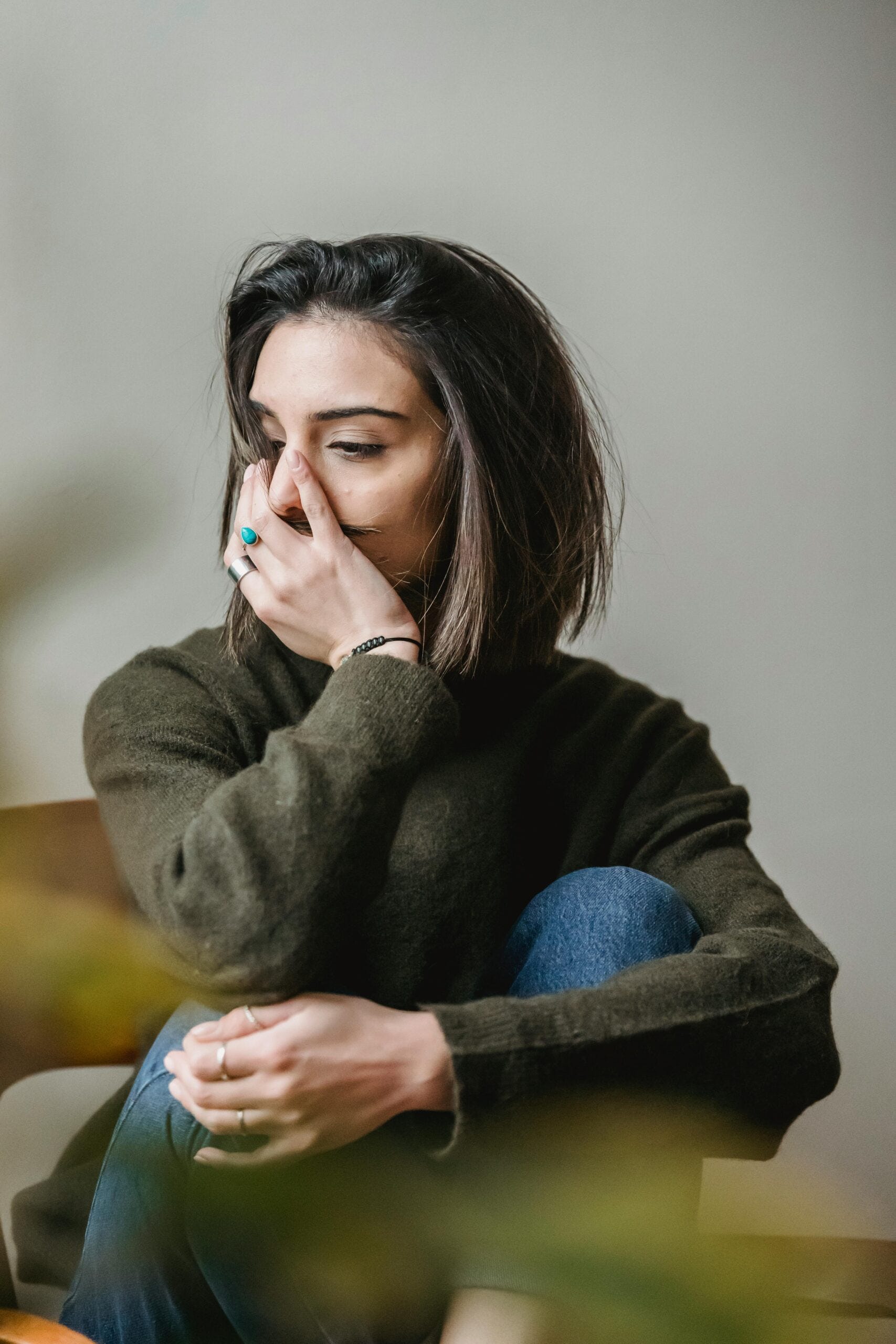
It doesn’t always look like a breakdown. It doesn’t always arrive with a diagnosis. It arrives quietly, in the middle of a perfectly ordinary day, loading the dishwasher, attending a family gathering, smiling through a conversation you no longer have the energy for. It arrives as numbness where there used to be warmth. As anxiety that has no single source. As a low-level grief, you cannot quite explain because, technically, nothing has been lost. Everything is fine. Everything is fine.
And yet.
This is Mental Health Awareness Week 2026, and this year’s theme is Take Action. Not just awareness. Not just language. Action. And for South Asian women navigating midlife and menopause, that call couldn’t feel more timely. Because awareness without action is something this community knows all too well. We’ve been aware of the suffering for decades. We’ve watched our mothers carry it. We’ve carried it ourselves. The question now, the urgent, honest question, is: What are we actually going to do about it?
First, let’s name what we’re really talking about
Midlife, for any woman, is a significant psychological and hormonal transition. The research is detailed on this. Perimenopause and menopause bring hormonal fluctuations, particularly declining oestrogen, that have a direct and documented impact on mood, sleep, cognition, and emotional regulation. Anxiety. Low mood. Brain fog. Disrupted sleep. Sudden tearfulness. Rage that arrives without warning. These are not personality flaws. They are physiological events that happen inside the body, reshaping the mind.
But for South Asian women, this is never the whole story.
Midlife doesn’t arrive in isolation. It arrives layered with everything else. The cultural conditioning around selflessness and endurance. The family roles that rarely have a pause button. In multigenerational households where a woman’s pain is simply absorbed into the background noise of daily life. The deep-rooted belief, absorbed so early it no longer feels like a belief, just a fact, that mental health struggles are something to be managed privately, never disclosed, certainly never discussed outside the family.
Add to this the specific pressures that many South Asian women in midlife are navigating simultaneously: caring for ageing parents whilst managing their own hormonal transition. Marriages that have shifted, quietly, into something unrecognisable. The empty nest. Financial dependence that has gone unexamined for years. The identity loss that comes when the roles you built your life around, mother, daughter, wife, carer, begin to change shape. Career transitions. Burnout. The particular grief of feeling like you’ve spent the first half of your life performing someone else’s version of it.
That is not a small amount of weight.
And in most South Asian families, there is still no language for it.
The silence is not neutral
It has a cost, and that cost looks like women in their forties and fifties presenting to GPs with symptoms of depression that have been quietly present for years, sometimes decades, before they found the words. It looks like hormone-related anxiety is being dismissed as stress, nervousness, or just “how you are.” It looks like women are going without support, not because it doesn’t exist, but because seeking it feels like a betrayal. Of the family. Of the culture. Of the expectation that South Asian women simply cope.
There is also the particular complexity of how mental health struggles are understood and misunderstood within South Asian communities. Sometimes symptoms of perimenopause are interpreted through a spiritual or religious lens in ways that delay practical support. Sometimes the stigma around mental illness is so severe that a woman will minimise her own suffering for years rather than risk being labelled, or worse, considered a burden, a problem, someone whose struggles reflect badly on the family.
The irony, of course, is that the silence itself becomes the thing that makes everything harder. What cannot be named cannot be addressed. What cannot be shared cannot be healed.
And the women who bear the silence the longest are often the ones most needed by everyone else.
Menopause is a mental health issue, and we need to say this louder
The hormonal shifts of perimenopause don’t just affect the body. They affect the brain. They affect mood regulation, emotional processing, memory, focus, confidence, and sleep, and disrupted sleep alone has cascading effects on mental well-being that are not trivial.
Research increasingly shows that the perimenopausal period represents a time of elevated vulnerability to depression and anxiety, not because women are emotionally fragile, but because the neurological effects of hormonal change are real and significant. In women who have a previous history of depression or anxiety, the perimenopausal transition can intensify those experiences considerably.
And yet.
How many South Asian women have sat in a GP’s office having these symptoms dismissed? How many have been sent away with antidepressants when what they actually needed was a conversation about their hormones? How many have never had that conversation at all?
There is a specific layer of invisibility here for South Asian women. Research consistently shows that minority ethnic women are less likely to receive timely, appropriate menopause support. Cultural and language barriers compound the difficulty. So does a healthcare system that was not designed with its specific risk factors, cultural context, or communication needs in mind.
Taking action means naming this clearly. Not politely. Clearly.
What action actually looks like
This year’s Mental Health Awareness Week is asking all of us to move from knowing to doing. And there are actions available at every level: individual, community, and systemic.
For the individual woman reading this:
Naming what you’re experiencing is an act of courage. You don’t need to wait until you’re in crisis. You don’t need to deserve support. Reaching out to a GP, a therapist, or a community like The Sattva Collective is not a weakness. It is one of the most intelligent things a woman who has spent years overextending herself can do.
If you have been told that what you’re feeling is “just stress,” and you know in your body that it is more than that, you are allowed to advocate for yourself. You are allowed to ask for a referral. You are allowed to seek a second opinion. You are allowed to seek support that understands your cultural context.
For the community:
The silence in South Asian families around mental health is not unchangeable. It is a pattern, inherited from necessity and survival, and patterns can shift. When we speak honestly in front of our daughters, we give them permission to speak. When we stop performing wellness at family gatherings and instead say quietly, “I am struggling,” something moves. Not everything. But something.
The collective healing of South Asian women doesn’t happen through individual breakthroughs alone. It happens when the community learns a new language. When aunties stop asking why she looks tired and start asking how she really is. When mental health stops being a topic spoken quietly about and starts being something spoken of with the same directness as blood pressure or diabetes.
For practitioners, organisations, and policymakers:
Culturally sensitive mental health support for South Asian women in midlife is not a niche concern. It is a healthcare equity issue. Midlife and menopause services need to understand the specific cultural, linguistic, and generational context of South Asian women’s experience. Outreach needs to go where these women already are: in community spaces, in Asian media, and on cultural platforms. GP training around menopause and mental health needs to improve. And the data gaps around minority ethnic women’s menopause experience need to be urgently addressed.
The quiet revolution is already happening
Here’s what I know after a year of building The Sattva Collective.
South Asian women are ready to talk. They are not fragile, they are not resistant to change, and they are not stuck in the past. They are exhausted, and they are wise, and they are, so many of them, quietly, fiercely ready to do something different.
When you give women a space that understands their context, they show up. When you use language that reflects their reality, not the sanitised, universal version of midlife, but the actual lived complexity of being a South Asian woman in her forties or fifties in the UK today, something unlocks.
I have sat with women who told me they had never spoken the words out loud before. Never said: I am not coping. I haven’t been coping for a long time. And something in the room shifted when they did. Not because anything had been fixed. But because the silence, finally, had ended.
That is the beginning of action.
This Mental Health Awareness Week, one action
If this essay has landed somewhere in you, if you’ve recognised something of your own experience here, I want to ask you to take one action this week.
Not a dramatic one, not a difficult one, just one.
Tell one woman in your life that you see her. That midlife is hard and complex, and that what she’s carrying matters. Share something, an article, a conversation, this essay, that names the reality of mental health in South Asian women’s midlife experience.
Or if the woman who needs that to land is you, let it land.
You are not too sensitive, you are not overreacting, you are not failing to cope, you are a South Asian woman in midlife, carrying a significant amount, in a world that has not always made space for your complexity.
That is worth acknowledging.
And then, gently, with support, at your own pace, worth doing something about.
The Sattva Collective CIC is the UK’s first community-led initiative supporting South Asian women through midlife and menopause, providing education, community, and culturally sensitive resources.
Visit us at www.thesattvacollective.org
If you are struggling with your mental health, please reach out to your GP or contact the Samaritans on 116 123 (free, 24 hours a day).