


Food is medicine. And for South Asian women navigating perimenopause and menopause, our cultural kitchens hold ancient wisdom waiting to be reclaimed.
Menopause marks a natural hormonal transition, not an illness, but a profound shift that affects everything from metabolism to mood, bone health to brain fog. While Western medicine often leans towards HRT (hormone replacement therapy), many South Asian women are turning to ancestral knowledge, food, spices, and rhythm to manage symptoms holistically.
But our diets, shaped by tradition and taste, can also become a double-edged sword.
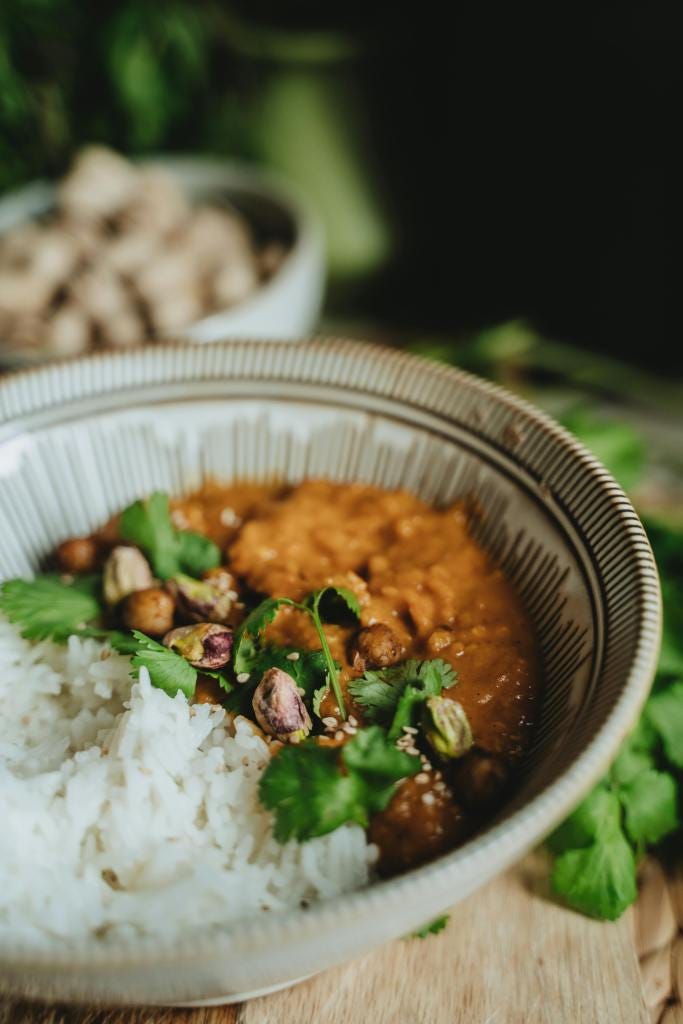
The Good, The Nourishing & The Necessary
Let’s start with what supports us:
Spices like turmeric (anti-inflammatory), fenugreek (balances blood sugar), cumin (digestion), and fennel (bloating relief) are powerful allies during menopause.
Greens like saag, methi, and curry leaves support liver function and hormonal detox.
Lentils and pulses provide much-needed fibre, protein, and phytoestrogens, plant-based compounds that gently support oestrogen levels.
A well-balanced thali, with good fats, complex carbs, diverse vegetables, and gentle spices, is far more than comfort food. It’s hormonal support on a plate.
The Hidden Harm in Tradition
However, modern versions of our traditional diets often come with complications.
Excess refined carbs (white rice, rotis made from processed flour) can spike blood sugar and worsen fatigue, mood swings, and belly fat.
Deep-fried snacks and sugar-laden mithai contribute to inflammation and insulin resistance, both linked to menopausal symptoms.
A lack of variety (too much rice, not enough vegetables) leads to nutrient gaps.
Add to this a sedentary lifestyle, emotional eating, and a mindset of feeding everyone else first, and food can become more stressful than soothing.

What Needs to Shift?
This isn’t about abandoning your cultural foods, it’s about honouring tradition while upgrading it for your changing body.
Swap white rice for millets, quinoa, or brown rice.
Add flaxseed, sesame seeds, or soaked almonds to curries and chutneys.
Use ghee mindfully; it’s a healthy fat when used in moderation.
Try herbal teas made with tulsi, cumin, coriander and fennel to ease bloating and cool hot flushes.
Eat mindfully, not hurriedly; midlife digestion slows down.
Stay hydrated, as hormonal changes affect kidney function and body temperature.
Emotional Nourishment Matters Too
Food isn’t just fuel. It’s memory. It’s love. Its identity. And during menopause, when the body feels unfamiliar, food can ground you back into your roots, if approached with care.
Make mealtimes sacred again. Cook with others. Share recipes. Keep the joy, but let go of guilt.

The Sattva Collective CIC is actively exploring ways to weave cultural nutrition and hormonal health together, offering workshops, recipes, and safe spaces for South Asian women to reclaim their plates and their power.
Because navigating menopause doesn’t have to be clinical, lonely, or bland. It can be rich, rooted, and deeply nourishing.
The post Food, Hormones & Heritage: Navigating Menopause Through a South Asian Lens appeared first on THE SATTVA COLLECTIVE.