


International Women’s Day (8 March) is often loud online and quiet in real life. We’ll see quotes. Campaign graphics. Panels. Corporate shout-outs. But if you’re a South Asian woman in midlife, you already know: empowerment isn’t a slogan. It’s a lived experience. It’s what happens inside homes, families, workplaces, and bodies that have been carrying everyone else for decades.
The United Nations frames International Women’s Day 2026 under the theme Rights. Justice. Action. For ALL Women and Girls. The International Women’s Day campaign theme for 2026 is Give To Gain, focusing on generosity and reciprocity to help forge gender equality.
Two themes, one shared invitation: Do something real.
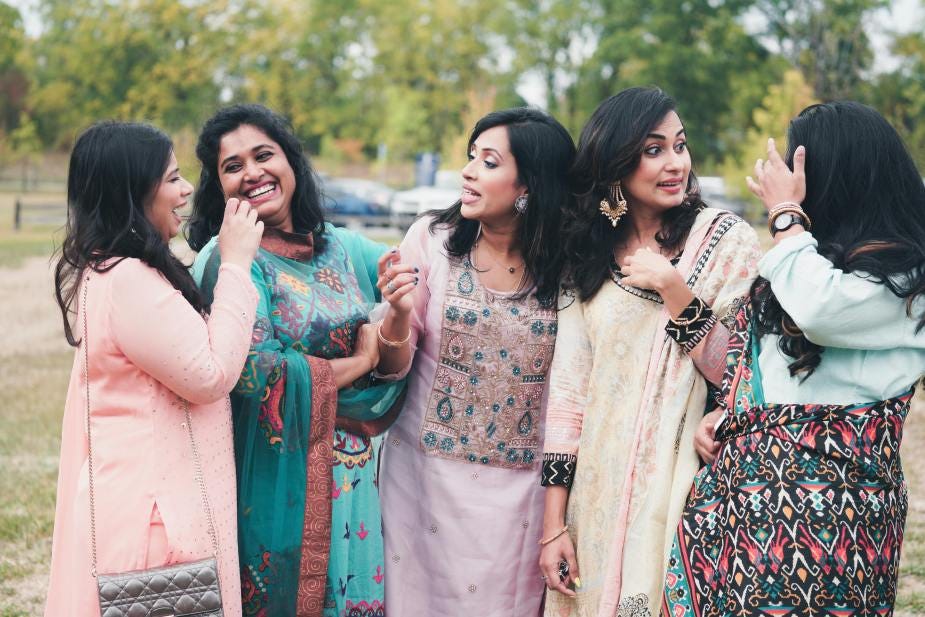
Why International Women’s Day lands differently in midlife
Midlife is when many South Asian women start telling the truth.
About:
menopause and how little support we’ve been offered
emotional labour and invisible caregiving
Marriages that look fine outside but feel lonely inside
money, dependency, and the price women pay for keeping peace
health symptoms we ignored because we were too busy being “strong”
So here’s a more honest definition of women’s empowerment in midlife:
It’s when you stop abandoning yourself.
Rights, justice, action… in everyday life
Let’s make those UN words practical:
Rights
The right to rest without guilt
The right to be taken seriously in healthcare
The right to say no without explaining yourself to death
The right to pleasure, friendships, ambition, and reinvention at 45+
Justice
Naming the cultural expectations that keep women over-functioning
Challenging the normalisation of women’s pain, silence, and burnout
Raising daughters and sons with emotional literacy, not gendered duty
Action
Booking the appointment you’ve delayed
Asking for help instead of collapsing first
Setting one boundary that protects your nervous system
Talking openly about menopause, mental health, and women’s bodies without shame
“Give To Gain” without self-sacrifice
South Asian women already give. Constantly.
So the invitation here is different. It’s not “give more”. It’s “give smarter“, in ways that actually create gain for women:
Give time by checking in on one woman who is struggling
Give knowledge by sharing real menopause or health resources
Give visibility by uplifting South Asian women’s stories and leadership
Give money if you can, to organisations supporting women’s health, safety, and wellbeing
Give space by normalising boundaries and rest in your family system
A simple International Women’s Day plan
Pick one action in each category:
For your body: book one health check you’ve delayed (blood pressure, smear, menopause review, anything).
For your mind: tell one trusted person the truth about how you’ve been feeling.
For your life: do one thing that moves your next chapter forward (apply, pitch, enrol, start, ask).
For other women: send one message that actually supports another woman, not just “happy IWD”.
Journaling prompts
Where am I still living by rules that were designed to keep women small?
What do I need to stop calling “normal” just because it’s common?
If I treated my midlife needs as valid, what would change this month?
What would empowerment look like in my home, not on social media?
A final note
International Women’s Day isn’t a performance review of womanhood. It’s a reminder that your life is not meant to be a constant act of endurance.
This year, let it land in a grounded place: your body, your boundaries, your voice, your choices. And let your version of empowerment be practical, cultural, honest, and sustainable.
The post International Women’s Day: What it means for South Asian women in midlife, beyond the hashtags appeared first on THE SATTVA COLLECTIVE.