


There is a question that Darpan Bhasin asks every woman she works with.
Not “How much do you want to lose?” Not “What did you use to weigh?” Not “How quickly do you want to see results?“
The question is this: How do you want to feel in the next decade of your life?
It sounds simple. But for many South Asian women in midlife, women who have spent decades measuring their health by how they look, how much they can give to others, and how quietly they can carry it all, it is the most disorienting question they have ever been asked.
Because no one has ever asked them before.
Darpan Bhasin is a qualified Personal Trainer and Nutrition Coach who left a corporate career to do work that she believes in, helping women build strength, confidence, and sustainable health from the inside out. No quick fixes. No restrictive plans. No telling women to become smaller versions of themselves.
Her approach is rooted in something The Sattva Collective holds deeply too: that midlife is not a decline to manage. It is a phase to navigate, with the right support, the right mindset, and the kind of honest, compassionate guidance that actually meets women where they are.
She works with women who are exhausted, depleted, disconnected from their bodies, and quietly struggling with the changes that perimenopause and menopause bring. And she helps them find their way back, not to who they were, but to something stronger, more grounded, and more sustainable themselves.
This is a conversation about strength. About food and culture and the guilt that doesn’t have to be part of either. About grief, consistency, and what becomes possible when a South Asian woman finally decides that her own body deserves attention, too.
We are very glad she is here.
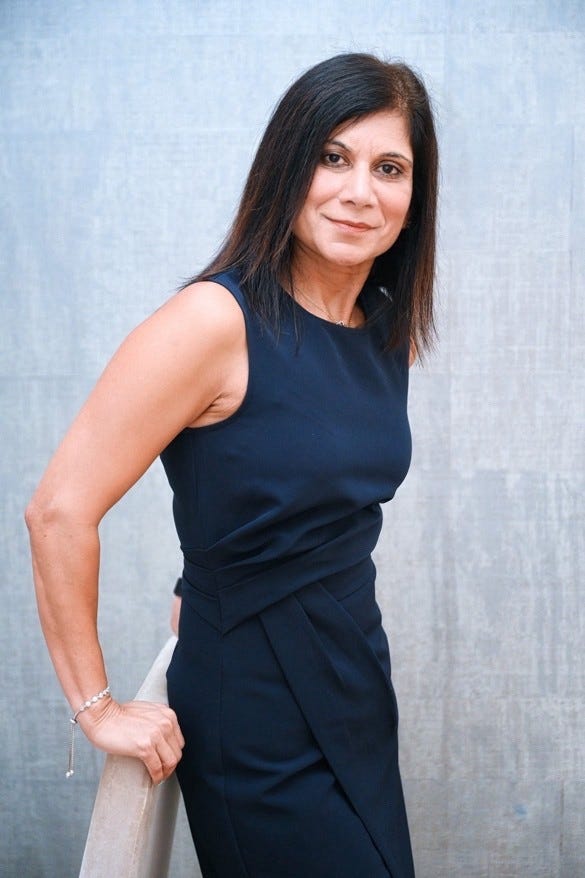
For many women, especially in South Asian communities, health has often been measured by how we look on the outside, how much we can give to others, and how quietly we can carry it all. Midlife and menopause invite us to challenge that narrative.
This phase is not about decline, it’s about redefining. It becomes less about appearance and more about building strength from within. Strength in our bodies, strength in our mindset, and strength in how we choose to show up for ourselves. It’s about asking a different question: How do I want to feel in the next decade of my life? Not just today, but 10, 20 years from now.
Redefining health at this stage means prioritising muscle, energy, and resilience. It means supporting our bodies through lifestyle changes that help us manage menopause, whether that’s strength training, nourishing ourselves properly, or creating habits that sustain our energy rather than drain it.
Body changes in midlife can feel deeply personal, especially for women who have spent years tying their worth to how they look. How do you help women shift the focus away from weight and towards something more sustaining?
At this stage, I help women zoom out. I help them shift their mindset away from just numbers and appearances and instead focus on what’s still working in their favour. Their body is still moving, and that, in itself, is one of the greatest gifts.
From there, we begin focusing on what their body can do rather than just how it looks. Can you move with ease? Do you have the energy to get through your day? Are you feeling stronger, more capable?
When women start noticing improvements in strength, energy, and overall well-being, their relationship with their body begins to change. It becomes less about shrinking themselves and more about supporting themselves, which creates something truly sustainable.
South Asian women are often the carers, the organisers, the ones holding everyone else together. What do you see happen when a woman in midlife finally realises that her own body needs attention too?
What I see is a gradual shift from depletion to awareness. They begin to recognise their own needs, their own fatigue, their own limits. And when they start taking small actions, even something as simple as carving out 20–30 minutes for themselves, it creates a ripple effect.
They have more patience. More clarity. More energy, and interestingly, they don’t become less available to others; they become better for others, because they’re no longer running on empty.
You speak about strength training as something transformative, not just physically but mentally. What changes have you witnessed in women who stop trying to become smaller and start building themselves stronger?
The shift is incredible, and it goes far beyond the physical. Physically, yes, they become stronger, more capable, and more resilient. But mentally, there’s a confidence that starts to build, not from how they look, but from what they’re proving to themselves.
They start trusting their body again. When a woman realises she can lift heavier than she thought, move better than she expected, and stay consistent even on hard days, it changes her internal dialogue. She starts respecting herself again.
And that body confidence shows up everywhere, in how she carries herself, how she sets boundaries, and how she navigates life.
Menopause can bring fatigue, brain fog, disrupted sleep, anxiety, and a sense of not quite feeling like yourself. Where do you encourage women to begin when they feel disconnected from their body and overwhelmed by the whole experience?
I always bring it back to simplicity, breaking things down into small, manageable steps. For me, it started with something as simple as a 10–15 minute walk each day. It may feel small, but those small actions build consistency, and that consistency helps women start feeling better about themselves again.
From there, we layer in the basics: regular movement, simple strength training, balanced meals with enough protein, and creating small routines that support better energy and sleep.
But just as important is mindset.
We need to understand that our bodies are not what they were 20 years ago, but that doesn’t mean they’re failing us. It’s changing. And when we shift our thinking and start adapting our actions to support this phase, that feeling of disconnection begins to ease.
It’s not about doing everything at once, but about starting small, staying consistent, and rebuilding that connection with your body over time.
Food is rarely just food, especially in South Asian households where love, culture, hospitality, and expectation are all tied up in it. How do you help women create healthier habits without losing that sense of identity or turning nourishment into guilt?
This is such an important conversation, because food is deeply emotional and cultural. I never approach it from a place of restriction or “cutting out” traditional foods. Instead, we look at balance and awareness.
How can we add rather than take away? Can we include more protein alongside traditional meals? Can we be more mindful of portions without feeling deprived? Can we create structure in our day so we’re not constantly grazing or skipping meals?
It’s about working with culture, not against it. When women realise they don’t have to give up the foods they love, but simply adapt how they eat them, the guilt disappears, and consistency becomes much easier.
My coaching is based on the 80/20 principle. You don’t need to eat perfectly 100%; eat with moderation & balance.
There can be a quiet grief in midlife when a woman realises the habits that worked in her 20s or 30s no longer serve her. How do you support women through that emotional shift, not just the practical one?
The first step is acknowledging that grief and that change. Because unless you recognise and accept what’s happening, you end up fighting against it, and that only creates more frustration.
I help women create a safe space where they understand that many of these changes are part of this phase of life and, in many ways, out of our control. But what is within our control is how we choose to respond, the actions we take to navigate it, and even to thrive through it.
We shift the focus. Instead of seeing it as something being taken away, we begin to ask different questions. Not “How much can I push or do?” but “What is my body capable of giving me right now?” From there, we take actions that support growth, strength, and self-focus.
And when women start to accept that these changes are a natural part of this phase, not something they’ve done wrong, the frustration softens, and those emotions become much easier to manage.
So many women in this season are not lacking knowledge; they are lacking capacity. They are depleted, stretched, and mentally carrying far too much. How important is mindset when it comes to creating change that actually lasts?
Mindset is everything. But at this stage, it’s not about pushing harder; it’s about being smarter. For many women, the old approach was more: more cardio, more time in the gym, more intensity. But now, it’s about asking a different question: What can I realistically do today with the energy I have?
Sometimes that might be a shorter workout, a walk, or a simple strength session that supports your body rather than draining it. It’s a shift away from unrealistic expectations and all-or-nothing thinking.
Because when women stop trying to do everything perfectly and start doing what’s sustainable, they become far more consistent, and that’s what creates real, lasting change.
Your own journey began with discovering what strength and lifestyle change could do for your life. How does that lived experience shape the way you speak to women who fear it is too late, or who have quietly given up on themselves?
My journey is a big part of how I connect with women. I didn’t come into this with everything figured out. I experienced the shifts, the challenges, the doubts, and what happens when you take small, consistent action.
So when a woman tells me it’s too late, I understand where that belief is coming from, but I also know it’s not true. I’ve seen what’s possible, not just in my own life but in the women I work with every day. It’s never about starting perfectly. It’s about starting where you are.
And often, midlife is actually the most powerful time to begin, because you bring greater awareness, greater resilience, and a deeper reason to want change.
If a South Asian woman in perimenopause is reading this while feeling exhausted, uncomfortable in her body, and unsure where to begin, what would you want her to hear from you clearly and compassionately?
I would want her to know this: You are not broken. And this is not the end of feeling like yourself. What you’re experiencing is real, and it’s valid, but it’s also a phase that you can learn to navigate with the right support and approach.
You don’t need to do everything at once. Start small. Start gently. But start. Take one step towards supporting your body, whether that’s moving a little more, nourishing yourself better, or simply choosing to prioritise yourself in a small way each day. Because this phase isn’t about losing who you are.
It’s about rediscovering yourself in a stronger, more grounded way.
What you’re feeling is valid. It’s real. And yes, your body is changing. But this is not something you’re going through alone. It’s a phase that generations before us have experienced, and generations after us will go through too. The difference now is that greater awareness, understanding, and support are available.
There are people like me who are here to guide women to start where they are and take small, meaningful steps forward. You don’t need to do everything at once.
Start small. Start gently. But start, because this phase isn’t about losing who you are.
It’s about learning how to navigate it with the right support and approach… and rediscovering yourself in a stronger, more grounded way.
What I want to sit with, after reading this conversation, is something Darpan says towards the end.
Start small. Start gently. But start.
It sounds almost too simple for how hard midlife can feel. But there is real wisdom in it. Because so many women in this community are not lacking in knowledge, they broadly know what would help them. What they are lacking is capacity. They are depleted. They are stretched. They are running on empty for everyone else and cannot find the entry point into doing something, anything, for themselves.
Darpan’s answer to that is not a programme or a plan. It is permission. Permission to begin with a 10-minute walk. Permission to add a little more protein to a meal you already love. Permission to stop fighting a body that is changing, and start listening to it instead.
For South Asian women who have spent a lifetime being told that their worth lies in what they give to others, that reorientation is not small. It is everything.
You are not broken. This is not the end of feeling like yourself. And you do not have to figure it out alone.
If you’d like to connect with Darpan and explore her work further, you can find her on Instagram at @deebee.fitness, where she shares practical, honest, and culturally grounded guidance for South Asian women navigating fitness and health in midlife.
The post Interview with Darpan Bhasin appeared first on THE SATTVA COLLECTIVE.