


Across the world, millions of women in their 40s will lie awake at exactly 3 AM, victims of a biological crime so systematic it’s almost coordinated. No one warned them. Most don’t even know they’re targets. And the medical establishment? They’re still talking about hot flashes.
About 75% women experience problematic symptoms of menopause like hot flashes and night sweats, 77% experience sexual drive problems, 2 out of 3 women disturbances in sleeping, and brain fog, but here’s what they don’t tell you: sleep disruption isn’t a side effect, it’s often the most devastating symptom.
Data reveals that more than 40% of perimenopausal women report sleep problems, yet just 49% of women in perimenopause have spoken to a health professional about menopause.
These aren’t isolated incidents. This is an epidemic.

Why Doctors Miss the Signs?
Doctors miss perimenopausal sleep disruption because they simply aren’t taught enough about menopause during and after their training.
The numbers are staggering:
In a 2024 survey of 157 British Menopause Society members, 72% said newly qualified healthcare professionals “have not been given enough education about menopause.”
The same survey found 55% believe there is “insufficient evidence‑based education training for qualified healthcare professionals.”
In the U.S., only one-fifth of obstetrician-gynaecologists report formal training related to menopause.
In a 2023 study, 31.3% of respondents reported having a menopause curriculum in their residency program.
Medical professionals admit the training gap is so severe that some doctors graduate without any menopause education whatsoever. Meanwhile, a global analysis of medical textbooks found that 58% contained no mention of menopause.
Experts Voicing their Support
As Dr. Lanny Wilson, MD, chair of the Physician Well-Being Program at UChicago AdventHealth Hospitals in Chicago, warns: “It is important for women going through perimenopause or menopause to not be ashamed.”
We, as physicians, have to take the time to listen to patients and see what symptoms they’re experiencing, because every transition is unique to every patient.” Added Dr. Butler, Ob-gyn, Member of the AMA board of trustees, noting that perimenopause and menopause vary for each woman by 85%.
Dr. Faubion, MD, Director, Mayo Clinic Women’s Health, revealed that in 2023, her own research found the devastating scope: “A full 13% of the women we surveyed experienced an adverse work outcome related to menopause symptoms, and about 11% were missing days of work because of these symptoms.”

What Triggers 3 AM Wake‑Ups?
Why 3 AM? The answer lies in a perfect storm of hormonal sabotage that strikes with military precision.
The Cortisol Connection
Studies of circadian rhythm, your 24-hour body clock, have shown that cortisol levels naturally begin to increase between 2 and 3 a.m. If you’re already stressed or anxious, and your cortisol levels are naturally rising, it’s not surprising that you’d wake up at that hour.
Many women also experience elevated nighttime cortisol, especially if they’re under chronic stress, which can cause 2 to 4 a.m. wake-ups that feel impossible to fall back asleep.
How Stress Hormones Disrupt Sleep
Dropping estrogen and progesterone in perimenopause disrupts thermal regulation and lowers serotonin, melatonin, ultimately lowering GABA receptor activity, while nighttime blood‑sugar dips trigger cortisol spikes, resulting in a 29% higher odds of sleep disturbance and 41.7% insomnia prevalence.
Simple Steps to Sleep Better
Following these simple steps curated by Vanswe Fitness experts, you can avoid sleepless nights:
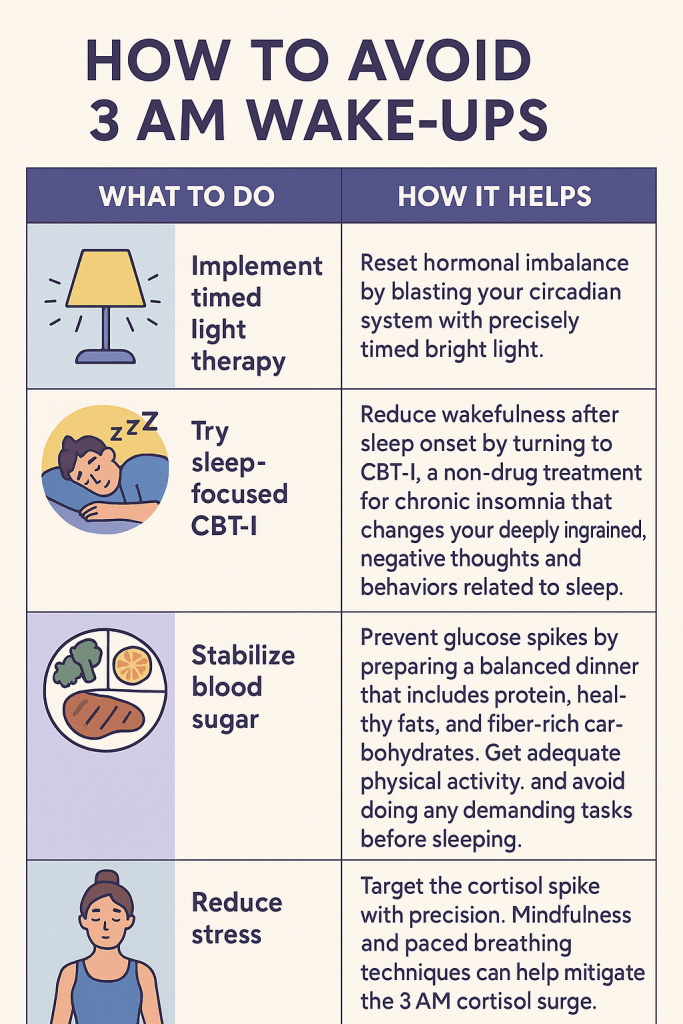
Key Takeaways for Restful Nights
As perimenopause quietly unsettles millions of women’s nights, the medical community’s blind spot has left many struggling alone. Yet understanding these hormonal shifts and demanding better menopause education for clinicians can transform care.
By combining awareness with targeted strategies like timed light exposure, CBT‑I, balanced nutrition, and stress management, women can finally reclaim restful sleep. It’s time for patients and providers to recognise perimenopausal sleep disruption as a core symptom, not an afterthought, and work together to end this silent epidemic once and for all.

About Vanswe Fitness: Vanswe Fitness, a leading home and commercial gym equipment supplier, specialises in strength and conditioning solutions for any workout space.
Sources
What doctors wish patients knew about menopause | American Medical Association
Mayo Clinic study puts price tag on cost of menopause symptoms for women in the workplace
Why Can’t I Sleep? The Real Reasons for Perimenopause Sleep Issues (and What Actually Helps)
All The Ways Menopause Messes With Your Sleep—And What You Can Do About It, According To Doctors
Sleep health challenges among women: insomnia across the lifespan
The post Is Perimenopause Stealing Your 3 AM Sleep? appeared first on THE SATTVA COLLECTIVE.