


Every January, like clockwork, the headlines arrive:
“Blue Monday: the most depressing day of the year.”
“Beat the Blue Monday blues with these tips…”
The third Monday in January gets branded as this big, dramatic low point, dark mornings, Christmas bills, failed resolutions, back-to-work fatigue. But here’s the thing, most people don’t realise:
Blue Monday isn’t a real psychological diagnosis. It began as a PR campaign in 2005, when a UK travel company, Sky Travel, asked a psychologist to create a “formula” for the gloomiest day of the year to help sell holidays. That “formula” has been widely criticised as pseudoscience, catchy marketing, not mental health truth.
So no, there isn’t one magical day when everyone is suddenly more depressed.
But.
January can feel heavy. Especially if you’re:
juggling money worries after December
dealing with cold, dark evenings
navigating perimenopause or menopause
caring for children, partners and ageing parents
carrying years of unspoken emotional weight
And if you’re a South Asian woman? That weight usually comes with something extra:
Silence.
Shame.
“Log kya kahenge?” (“What would people say?”)
So let’s use this whole Blue Monday conversation as a doorway, not into gimmicks, but into something real: your mental health in midlife, as a South Asian woman.
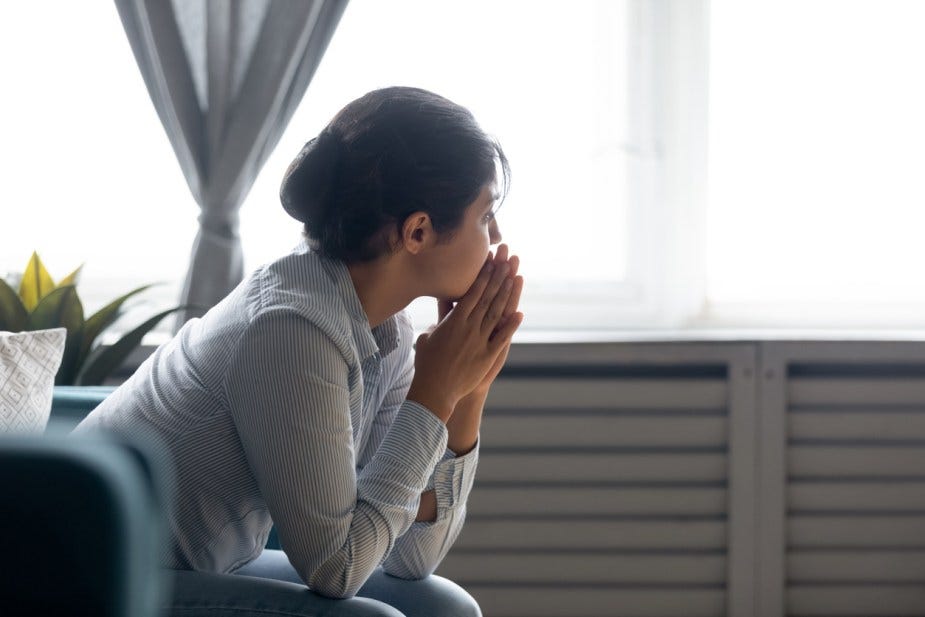
The problem isn’t one “blue Monday”. It’s twelve heavy months.
For many of us, low mood, anxiety, exhaustion and emotional burnout don’t appear for one dramatic day and then disappear again. They build.
Across years of:
being the emotional glue in the family
navigating racism, microaggressions and feeling “othered”
carrying expectations around marriage, motherhood, career and care
surviving health issues quietly
pretending we’re fine because “at least we have a roof, food, a job”
Research in the UK has found that South Asian communities often have higher levels of psychological distress compared to the white majority, linked to things like racism, poverty, housing and social exclusion. And yet, we’re less likely to access mental health services, even when we’re struggling.
One study found that only about a third of South Asians surveyed had a functional understanding of mental health, compared with 60% of the general UK population, which means many of us don’t have the language or confidence to name what we’re going through. So we minimise. We spiritualise. We internalise.
We call it:
“Just stress”
“I’m just tired”
“Everyone goes through this”
“I don’t want to make a fuss”
But if you’ve been feeling low, anxious or numb for a long time, it’s not just “Blue Monday”. It’s something that deserves your attention.
Why South Asian women often struggle in silence
Let’s name some of the specific barriers our community carries, so you know you’re not “just weak” for finding it hard.
1. Stigma and shame
In many South Asian families, mental health is still wrapped in taboo.
You might have heard:
“Don’t talk about these things outside the house.”
“What will people say if they know you’re seeing a therapist?”
“We all had it harder, and we didn’t complain.”
Sometimes mental health is framed as:
lack of faith
bad parenting
weakness
“drama”
When that’s the environment, of course, you hesitate to say:
“I think I might be depressed.”
“I’m not coping.”
“I need help.”
2. The “strong one” role
If you’ve spent years:
being the practical one
managing crises
remembering everyone’s appointments
listening to everyone’s problems
…it can be very hard to flip the script and say:
“Actually, I need support too.”
You get praised for coping. For being resilient. For never breaking.
It’s hard to admit that the “strong one” is exhausted.
3. Cultural mismatch in services
Even when South Asian women do reach out, the system isn’t always easy or safe to access.
Studies have found that South Asians in the UK underuse mental health services, sometimes because of stigma and sometimes because services don’t feel culturally attuned, a lack of understanding of family dynamics, racism, language barriers, and experiences of not being taken seriously.
So you might think:
“Will they understand my family context?”
“Will I have to explain my culture from scratch?”
“What if they judge my marriage, living situation or faith?”
And it starts to feel easier to just carry on. Quietly.
What Blue Monday gets wrong, and what it gets half-right
Mentally, here’s where Blue Monday actually can help: Not as a “most depressing day” (because that’s not real), but as a prompt.
A reminder that:
January might be a vulnerable time. The pressure of “new year, new me” can clash with midlife reality
Long, dark days can make existing mental health struggles feel heavier
But instead of quick fixes and “cheer up” posts, you deserve something deeper and more honest.
So let’s do that.
How are you really doing? (Be honest, Love.)
Take a breath. If we were sitting in your kitchen with a cup of chai and no one else listening, how would you actually answer these?
How has your mood been over the past few weeks?
Are you waking up feeling heavy, or ok?
Is your sleep broken? Are you lying awake worrying?
Is there anything that used to bring you joy that now feels flat?
Are you eating just to get through the day, or forgetting to eat?
How talkative is that inner critic right now?
And the big one:
Are you actually living, or just functioning?
If what you’re feeling is more than a “January dip”, that matters.
Gentle signs you might need more than a motivational quote
You don’t need to diagnose yourself. But it’s worth paying attention if, for more than a couple of weeks, you notice:
Persistent low mood most of the day
Loss of interest in things that usually bring you joy
Constant tiredness, even after rest
Tearfulness for “no reason”
Irritability or anger that doesn’t match the situation
Feeling numb, disconnected or “on autopilot”
Difficulty concentrating, memory issues, decision fatigue
Changes in appetite or sleep
Thoughts like “What’s the point?” or “It wouldn’t matter if I wasn’t here”
These can be signs of depression or anxiety, which are real health conditions, not personality flaws. And they are treatable.
Practical, culturally-realistic steps you can take
Let’s keep it simple and doable in real South Asian midlife life.
1. A truth check with yourself
Find ten quiet minutes. Ask yourself, gently:
“On a scale of 1–10, how ok am I, really?”
Where:
1 = “I’m barely coping.”
10 = “I’m genuinely well.”
If you’re regularly at 3–4 or below, that’s your inner self asking for more support.
2. One person who gets to know the full story
You don’t have to tell everyone. Start with one:
a friend
a sister or cousin
a partner (if it’s safe)
a therapist
And instead of “I’m fine”, try:
“Honestly, I’ve been feeling really low / anxious / flat for a while, and I don’t know what to do with it.”
Notice who can hold that without shutting you down or rushing to fix it.
That person is part of your support system.
3. Speak to your GP, and name the cultural piece
When you book, you might say:
“I’d like an appointment to discuss my mental health. I’ve been feeling low / anxious for a while.”
With the GP, be as concrete as you can about:
How long has it been going on
How it’s affecting daily life
sleep, appetite, concentration, work, relationships
If you worry you won’t find the words in the moment, write bullet points beforehand.
And you can say:
“I’m South Asian and there’s a lot of stigma about mental health in my community. It’s taken me a lot to come here.”
It gives them context for how important that appointment is.
4. If formal therapy feels big, start with “mental health adjacent” spaces
You might feel more comfortable starting with:
a support group for women or carers
a faith-based or community organisation that understands South Asian women’s realities
Some charities and community groups are actively working to support South Asian mental health with culturally attuned approaches. You’re allowed to start where it feels safest.
5. Tiny daily supports, not giant “resolutions”
Instead of trying to “fix your mental health” in one go, think about 1–3% shifts:
Going for a 10–15 minute walk most days, even if you feel heavy
Eating one proper, grounding meal, even if the rest of your day is chaos
Getting outside in daylight every morning, especially in winter
Having a phone-free, worry-free 20 minutes doing something that soothes you: a warm shower, reading, music, prayer, journalling
These aren’t cures. They’re stabilisers, small things that give your nervous system a bit more steadiness while you seek deeper support.
Talking about Blue Monday in South Asian circles (without the eye-rolls)
If you want to gently open a conversation in your circles, you can play with Blue Monday without buying into the myth.
You might say in a WhatsApp group:
“Apparently it’s ‘Blue Monday’ today, all marketing, really, but honestly winter is a bit of a mental health wobble for me. How’s everyone really doing?”
Or with a friend:
“They call this the ‘most depressing day of the year’ which isn’t true, but it did make me think about how many of us struggle in winter and just keep going. I’ve not been feeling great if I’m honest.”
You’re not forcing anyone. You’re just cracking the door open.
Gentle journaling prompts for your mental health this winter
If you want to explore this privately, try these:
What am I carrying emotionally right now that nobody sees?
Where in my life am I performing “I’m fine” when I’m actually not?
What did I learn in childhood about emotions and asking for help? How is that affecting me now?
If I believed my mental health mattered as much as my family’s, what’s one small step I would take this week?
Who do I feel safest being honest with, even a little bit more honest than usual?
Let whatever comes out, come out. No editing.
You are allowed to struggle. You are allowed to get support.
Blue Monday will come and go. The hashtags will move on.
But your mental health is not a one-day campaign. It is the ground you stand on, every single day, as you:
mother
care
work
love
lead
survive
rebuild
You don’t have to earn support by collapsing. You don’t have to wait until it’s unbearable. You are allowed to say:
“This is too much for me to carry alone.”
Not because you’re weak. But because you’ve been strong for a very, very long time.
If this January feels heavy, let that be information, not a verdict. And let it be the moment you stop only caring for everyone else’s mind, and start caring for your own as well.

The post It’s Not Just Blue Monday: Naming the Quiet Struggle of South Asian Women appeared first on THE SATTVA COLLECTIVE.