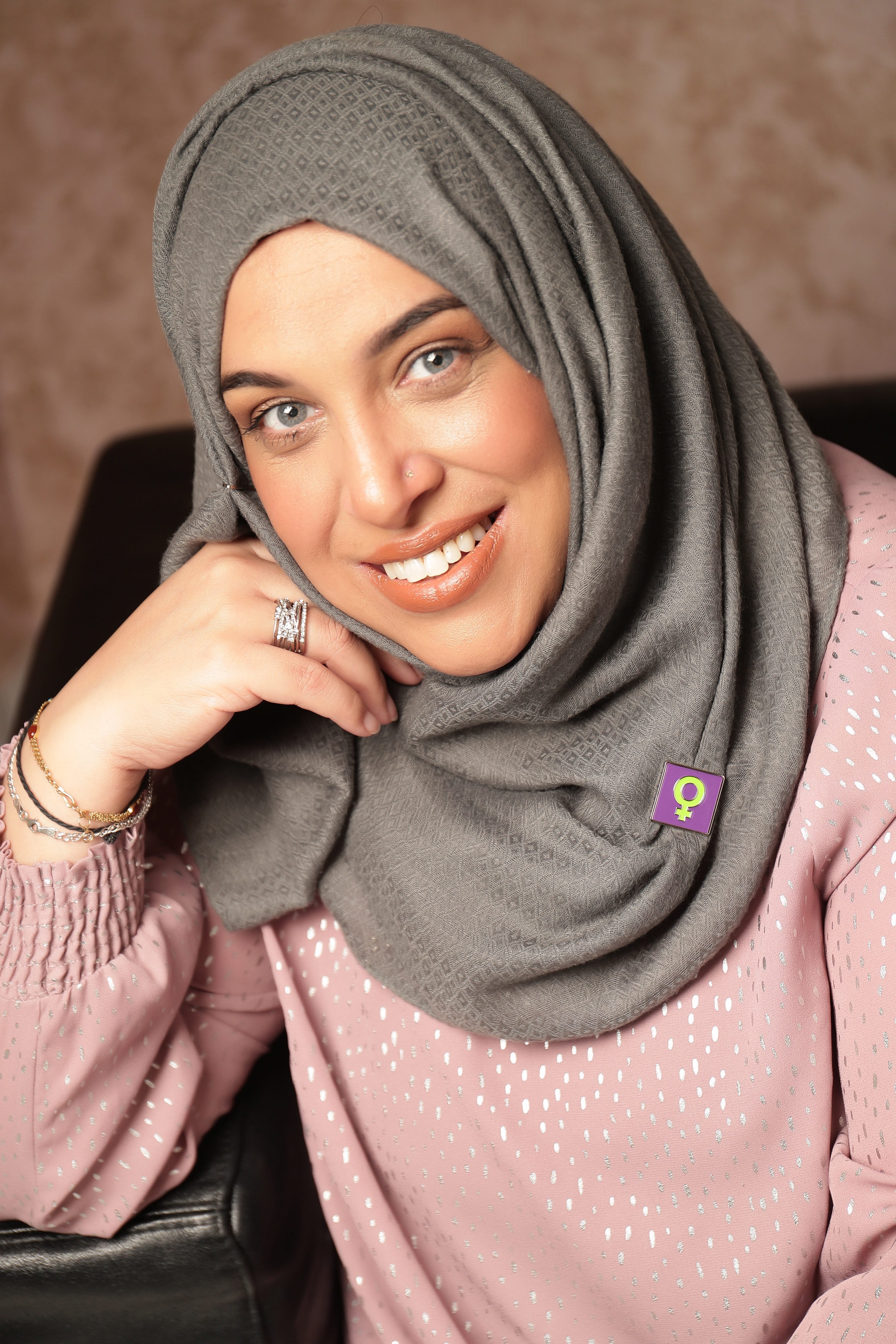
In a few words, how would you describe where you are in your midlife journey right now?
I’m 45 and currently navigating perimenopause. I first began noticing changes around 40, so the past five years have been a journey of getting to know my changing body. Some days are definitely harder than others, and I by no means have everything figured out. But I’ve learned to listen more closely to what my body needs, and investing time in my own health and wellbeing has become a fundamental part of understanding and supporting myself through this stage of life.
Where are you based?
Ipswich, Suffolk.
Tell us your Sattva Story.
I turned 40 during COVID, and that was when I first started noticing changes in myself. At the time, I didn’t think for a million years that they could be connected to perimenopause.
I was becoming more irritable. I started gaining a little weight around my tummy that hadn’t been there before — although, being in lockdown, I genuinely wondered whether all the banana bread might have had something to do with it! I also began struggling to retain information. I could read something five times and still be unable to tell you what I’d just read.
I knew something wasn’t quite right, so I started doing my own research.
And that’s really where the seed for Nourish Her was planted.
I remember thinking: Where are the answers? Where are the other women having these conversations? Where is the practical help I’m so desperately searching for?
There was clinical information available, but I wanted to know what I could actually do. What tools could I use to support myself? How could nutrition help? How could I manage the stress and anxiety I was experiencing? And where were the communities where I could meet other women going through the same thing and simply hear, “Me too”?
Like many women desperately looking for answers, I also fell into the trap of buying things that promised to “fix” my menopause symptoms. I tried the lotions, the potions, and the pills! At one point, I remember looking at a supplement I was taking three times a day that claimed to help with sleep, bloating, and weight management and thinking, “Hang on... really?”
That was a turning point for me.
I realised I needed to stop looking for something that promised to fix me and start understanding what was actually happening to me.
And if I wanted to help other women, I knew I needed to educate myself properly too. With my background in nutrition, my instinct was already to strip everything back to basics — no complicated plans and no ingredients or nutrients you need a science degree to pronounce! But I wanted a deeper understanding of menopause itself, so I trained with Menopause Experts Group and continued developing my menopause knowledge.
I was also looking for ways to support the stress and anxiety I was experiencing personally, which led me to EFT. I began using it myself, felt the benefits of having a practical tool to help me manage how I was feeling, and eventually decided to qualify in EFT too. I also studied menopause further because I wanted to better understand the reasons behind so many of the changes I had been experiencing.
Over time, all of those pieces came together and helped shape what Nourish Her is today: education, nutrition, nervous system regulation, and community.
But perhaps the most important thing is that I don’t stand outside the woman I’m trying to help.
I am my own client. I am the woman I’m trying to help not feel so alone.
I’m 45 now and still navigating perimenopause myself. I don’t have everything figured out, and I don’t pretend to. But every day I become more convinced of how needed these conversations are.
Menopause doesn’t care where you come from, what your background is, whether you’ve had children, or what your life looks like. Women across every community can find themselves reaching this stage wondering, “What is happening to me?”
That’s why education is so important to me. When we understand what’s happening in our bodies, we are in a much stronger position to make informed choices about how we support ourselves.
I want another woman who is searching for the answers I was searching for at 40 to find knowledge, practical tools, community, and somebody willing to say, “I get it. Me too.”
Because sometimes knowing you’re not the only one is where everything begins.
Is there one thing you wish someone had told you earlier about midlife?
I can put my hand on my heart and say that at 40, I knew virtually nothing about perimenopause or menopause. I knew that at some point, probably in my 50s, my periods would stop — and honestly, that was about it.
I had no idea about the transition that could come before that. I didn’t know about the range of symptoms women could experience or how deeply some of those symptoms could affect your confidence, relationships, family life, and ability to function day to day.
So if there is one thing I wish someone had told me earlier, it would simply be: understand menopause before you find yourself in the middle of it.
And actually, I don’t think that education should only be for women.
Imagine how different this stage of life could feel if husbands and partners understood what she was experiencing. If children understood why Mum might not quite feel like herself some days. If workplaces understood that a woman forgetting a word halfway through a sentence doesn’t suddenly erase the years of knowledge, experience and dedication she brings to her role.
Women can reach midlife having spent decades building careers, raising children, doing school runs, running homes, caring for parents and looking after everybody around them. Then they can find themselves experiencing changes they don’t understand, perhaps struggling at work or losing confidence and wondering where the woman they used to know has gone.
That’s why understanding matters.
Menopause may happen in a woman’s body, but its impact doesn’t necessarily stop with her. It can touch relationships, families, workplaces, and communities.
I wish I’d understood that at 40. But even more than that, I wish we lived in a world where understanding menopause was simply part of growing up — for women and for the people who will live, love, and work alongside them.
Because imagine how much less alone a woman might feel if the people around her understood too.