


I want to start with what self-care isn’t, because I think we’ve been sold the wrong picture for a long time.
It isn’t a candle. It isn’t a face mask on a Sunday evening, photographed at just the right angle before it slides off your cheekbones. It isn’t a spa day you feel guilty about the second you book it, and it certainly isn’t something you earn only once everyone else in the house has been fed, ferried, and settled.
For most South Asian women I know, self-care has quietly become another item on the to-do list; something else to fail at.
International Self-Care Day falls on 24th July. The date itself is a small piece of poetry: 7/24, a reminder that looking after yourself isn’t meant to be a once-a-year event, or even a once-a-week one. It’s meant to happen every day, in ways so small they barely look like anything at all.
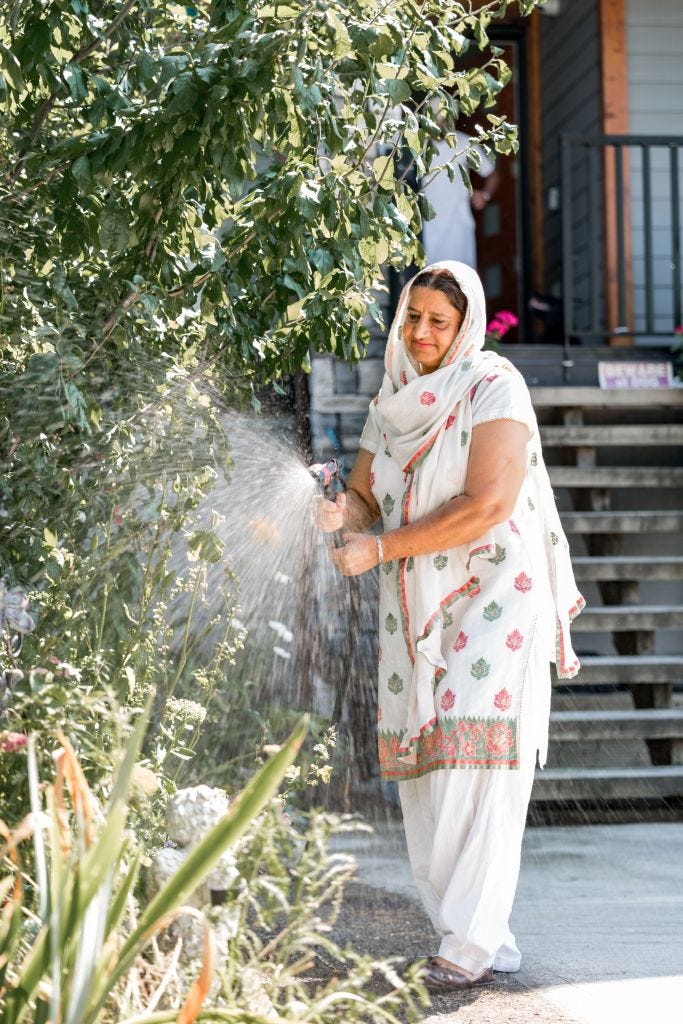
I think about my own mother’s version of rest. It was rare, and when it came, it came disguised, watching Khana Khazana and trying new recipes. Listening to Gurbani LIVE from Harmandir Sahib on low before anyone else woke. She never once used the word “self-care.” Watering and caring for her kitchen garden in the afternoon. She wouldn’t have known what to do with it. But I recognise it now, looking back; those were the moments she was quietly putting herself back together, in the only language her life allowed her.
We inherited that same instinct, many of us. The idea that rest has to be hidden. Earned. Squeezed into the gaps other people don’t want.
And in midlife, that instinct starts to cost us something we can’t always get back.
Why this hits differently after 40
Something shifts in perimenopause and menopause that makes the old way of coping, pushing through, running on empty, putting yourself last, genuinely harder to sustain. Not because we’ve become weaker. Because our bodies have started asking for something different, and they’re asking louder than before.
Cortisol sits differently in a perimenopausal body. Sleep, already fragile for so many of us, becomes something we chase rather than simply have. The nervous system that once absorbed everything – the caregiving, the career, the emotional weight of an entire extended family – starts to show its edges.
This is the part nobody warned us about. Self-care in midlife isn’t a treat anymore. It’s closer to maintenance. It’s the difference between a body that can keep meeting everyone’s needs and one that’s quietly running on fumes, smiling through it because that’s what we were taught a good woman does.
What self-care actually looks like, stripped of the marketing
Real self-care, the kind that holds up on an ordinary day and not just a curated Sunday, tends to look unglamorous.
It looks like saying no to the fourth family function of the month without an essay of justification attached. It looks like closing the WhatsApp group chat and not feeling like you owe anyone an explanation for the silence. It looks like eating a meal while sitting down, with a plate in front of you, before it goes cold. It looks like naming what you need out loud, in your own home, in your own language, without waiting to be given permission first.
None of this photographs well. All of it matters more than anything that does.
The permission piece
Here’s what I keep coming back to: so many of us were raised to believe that tending to ourselves is a kind of selfishness, that a good daughter, a good wife, a good mother puts everyone else first, every time, without exception. We absorbed that as a virtue. It so often becomes a slow erosion.
This is where the timing of this year’s Self-Care Day feels meaningful, sitting as it does inside South Asian Heritage Month. Because self-care, done honestly, isn’t a departure from our culture; it’s an act of reclaiming it. Rest, boundaries, softness towards ourselves – these things exist in our traditions too, even if they got buried under generations of “log kya kahenge.”
You are allowed to put the kettle on and drink the tea while it’s hot. You are allowed to let the phone ring out. You are allowed to rest before you’re depleted, not only after.
That’s not indulgence. That’s simply what taking care of yourself, honestly and daily, was always meant to look like.
With love and Sattva,
Kiran x